
Choosing the right decking for your garden can feel overwhelming when British weather is unpredictable and your outdoor space deserves lasting beauty. Homeowners across the United Kingdom are discovering how composite decking blends recycled wood and plastic to create a practical, stylish alternative to traditional timber. By embracing durable low-maintenance solutions, you can enjoy an attractive deck that stands up to the climate while reducing ongoing upkeep and costs.
Table of Contents
- Composite Decking Defined And Misunderstood
- Varieties Of Composite Decking Boards
- Weather Resistance And Lifespan Explained
- Maintenance And Cost Over Time
- Eco Credentials And Sustainability Benefits
- Composite Vs. Timber: Key Differences
Key Takeaways
| Point | Details |
|---|---|
| Composite Decking Benefits | Offers long-term durability, low maintenance, and superior weather resistance compared to traditional timber. |
| Variety of Options | Features diverse styles, including solid, hollow, capped, and textured boards to meet aesthetic preferences. |
| Cost Efficiency | While initial costs are higher, composite decking significantly reduces ongoing maintenance and replacement expenses. |
| Environmental Impact | Made from recycled materials, contributing to sustainability and reducing reliance on virgin timber resources. |
Composite Decking Defined and Misunderstood
Composite decking represents a sophisticated engineered solution transforming outdoor living spaces across the United Kingdom. Unlike traditional timber, composite decking materials blend wood fibres with recycled plastics to create a revolutionary landscaping product designed to withstand Britain’s challenging weather conditions.
At its core, composite decking is a carefully constructed material that combines multiple components to deliver superior performance. The typical composition includes:
- Recycled wood fibres from timber manufacturing waste
- Reclaimed plastic polymers
- Binding agents and colour pigments
- UV-stabilising additives for colour retention
The structural integration principles reveal how these materials achieve remarkable durability. By strategically combining different elements, manufacturers create a product that transcends traditional wooden decking’s limitations.
Many homeowners misunderstand composite decking, believing it to be simply an expensive alternative to timber. In reality, these materials offer substantial long-term benefits that justify their initial investment. Composite decks resist moisture, prevent splintering, and maintain their aesthetic appeal with minimal maintenance – characteristics that traditional wooden decking cannot match.
Composite decking isn’t just a material; it’s an engineered solution designed to transform outdoor living spaces with unprecedented durability and low maintenance.
Structural Performance sets composite decking apart from conventional materials. Wood-concrete composite systems demonstrate how strategic material combinations can enhance strength, stiffness, and overall performance. Similar principles apply to modern composite decking, where carefully selected components work synergistically to create a superior product.
Pro tip: Always request material samples and compare different composite decking options before making a final selection to ensure you choose the most suitable product for your specific outdoor environment.
Varieties of Composite Decking Boards
Composite decking boards come in a diverse range of styles, colours, and compositions designed to meet the unique requirements of British homeowners. Solid composite boards and hollow composite boards represent the two primary categories, each offering distinct advantages for outdoor living spaces.
The main varieties of composite decking boards include:
- Solid boards: Dense, robust construction ideal for high-traffic areas
- Hollow boards: Lightweight and more cost-effective option
- Capped boards: Enhanced protection with an additional polymer layer
- Uncapped boards: Traditional composite design with lower initial cost
- Wood-grain textured boards: Mimicking natural timber aesthetics
- Smooth finish boards: Contemporary and minimalist appearance
Composite deck design principles reveal how manufacturers strategically combine materials to create performance-driven products. These boards typically incorporate recycled wood fibres, plastic polymers, and specialised binding agents to deliver exceptional durability and resistance to environmental challenges.
Understanding the structural nuances of composite boards helps homeowners make informed decisions. Each variety offers unique benefits, from enhanced moisture resistance to improved aesthetic flexibility. Composite deck engineering techniques demonstrate how advanced manufacturing processes contribute to the superior performance of modern decking materials.
Modern composite decking boards represent a sophisticated engineering solution, transforming outdoor spaces with unprecedented durability and design flexibility.
Colour and texture options have expanded dramatically, allowing homeowners to select boards that complement their specific architectural style and landscaping preferences. From rich, earthy tones resembling natural timber to contemporary grey and slate finishes, composite decking provides remarkable aesthetic versatility.
Here’s a summary of the primary varieties of composite decking and their ideal uses:
| Board Type | Key Characteristic | Best For |
|---|---|---|
| Solid Composite | High density and resilience | Heavy foot traffic areas |
| Hollow Composite | Lightweight and economical | Residential decks or balconies |
| Capped Composite | Extra polymer protection, improved UV resistance | Exposed or sunny garden spaces |
| Uncapped Composite | Lower initial cost, classic composite feel | Budget-friendly garden projects |
| Wood-Grain Texture | Imitates natural timber grain | Rustic or traditional aesthetics |
| Smooth Finish | Sleek, contemporary appearance | Modern architectural styles |
Pro tip: Request physical samples of different composite decking board varieties to assess texture, colour, and feel before making your final selection.
Weather Resistance and Lifespan Explained
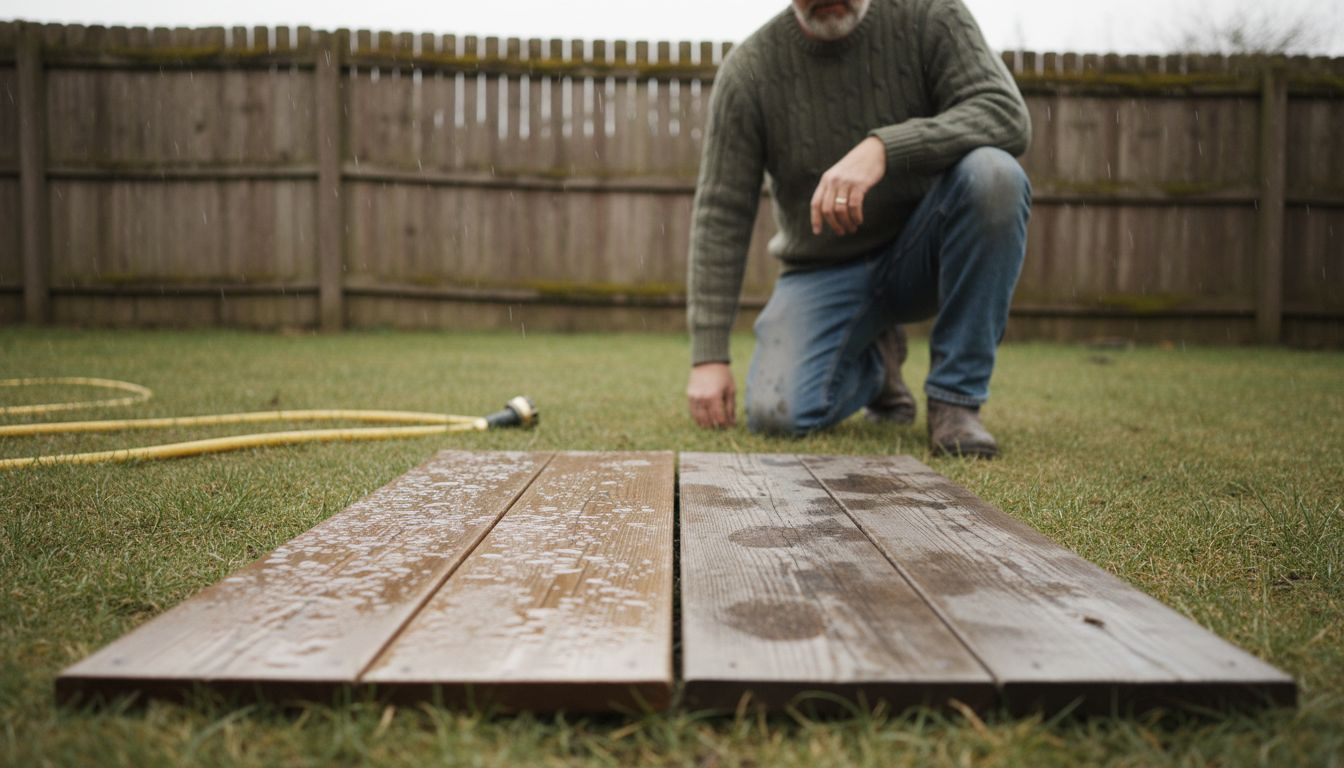
Weather resistance represents the cornerstone of composite decking’s exceptional performance, particularly in the United Kingdom’s challenging climate. Unlike traditional timber decking, composite materials are engineered to withstand extreme moisture, temperature fluctuations, and persistent environmental stressors that typically degrade natural wood surfaces.
The key components contributing to superior weather resilience include:
- UV-resistant polymers preventing colour fading
- Moisture-blocking surface treatments
- Rot and mildew-resistant core materials
- Thermal expansion technologies
- Integrated protective polymer caps
- Advanced binding agents preventing water absorption
Timber decking specifications demonstrate the critical importance of material durability in outdoor applications. Composite decking significantly outperforms traditional timber by maintaining structural integrity and aesthetic appeal throughout harsh British weather conditions.
Lifespan expectations for composite decking are substantially longer than conventional wooden alternatives. Composite deck design principles reveal how strategic material combinations create decking systems capable of withstanding prolonged environmental exposure without significant degradation.
Composite decking represents an investment in long-term outdoor durability, providing homeowners with a reliable surface that resists weathering more effectively than traditional materials.
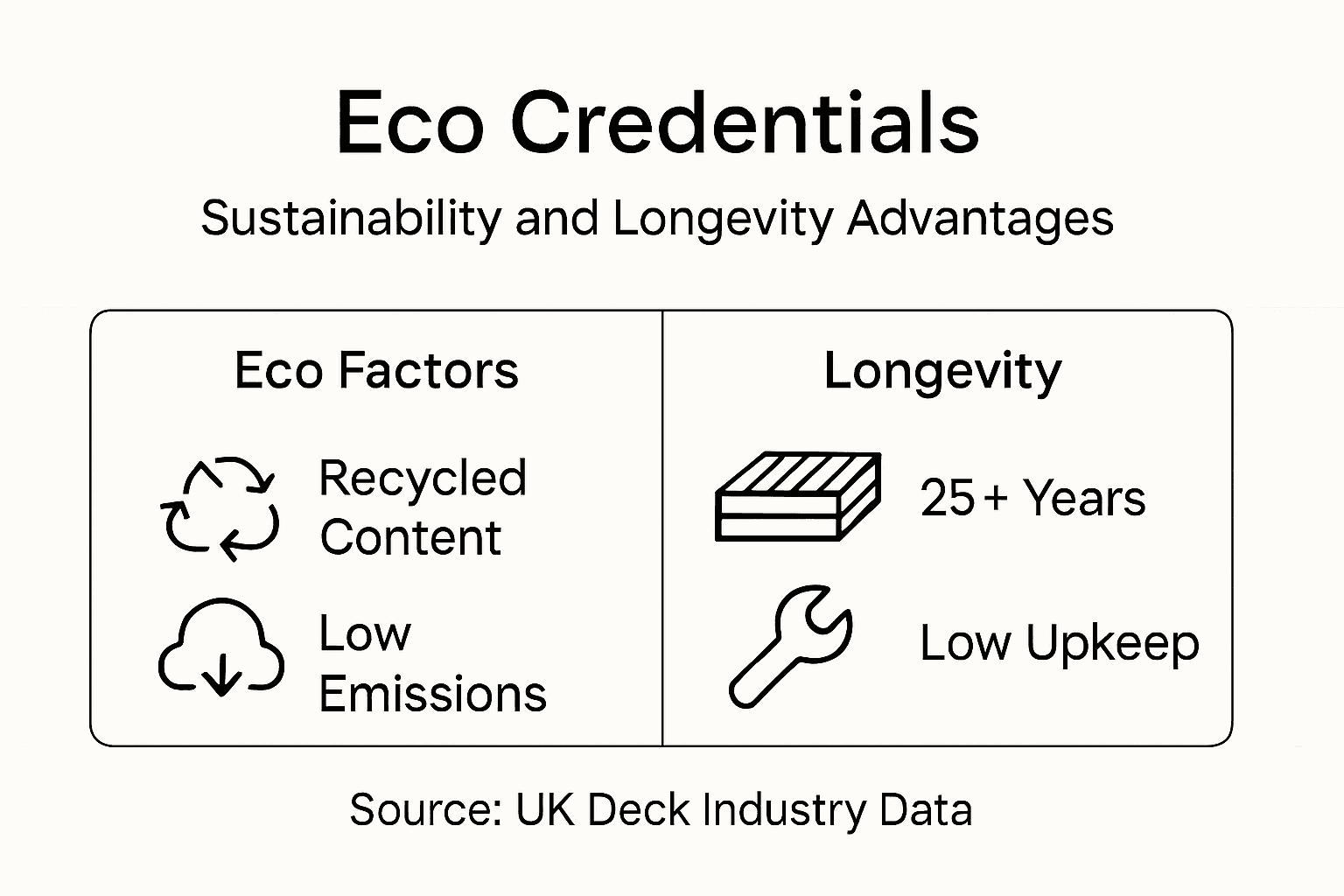
Manufacturers typically guarantee composite decking lifespans between 25-30 years, compared to 10-15 years for standard wooden decking. This extended durability stems from advanced engineering that prevents common deterioration mechanisms like splintering, warping, and colour degradation.
Pro tip: Choose composite decking boards with comprehensive manufacturer warranties and conduct annual maintenance inspections to maximise your deck’s longevity and performance.
Maintenance and Cost Over Time
Long-term cost efficiency represents one of the most compelling arguments for choosing composite decking in British homes. While the initial investment appears higher than traditional timber, the true financial advantage emerges through reduced maintenance requirements and extended product lifespan.
Composite decking maintenance involves minimal effort compared to traditional wooden alternatives:
- No annual wood staining or sealing required
- Resistance to rot, mould, and insect damage
- Simple cleaning with soap and water
- No sanding or extensive repairs needed
- Consistent aesthetic appearance for decades
- Minimal replacement of individual boards
Cost estimating guidance emphasises the importance of considering full life-cycle expenses when selecting outdoor materials. Composite decking delivers substantial long-term savings by dramatically reducing ongoing maintenance and replacement costs.
Comparative cost analysis reveals significant financial benefits. Composite deck systems demonstrate predictable maintenance schedules that translate into consistent, manageable expenses over the deck’s lifetime. Homeowners can expect to invest approximately 70-80% less in maintenance compared to traditional timber decking.
Composite decking isn’t an expense; it’s a strategic long-term investment in your property’s outdoor living space.
The cumulative financial advantages become particularly pronounced over extended periods. Where wooden decks might require complete replacement after 10-15 years, composite decking maintains structural integrity and aesthetic appeal for 25-30 years with minimal intervention.
Pro tip: Calculate your potential long-term savings by comparing initial composite decking costs against projected maintenance and replacement expenses for traditional timber decking.
Eco Credentials and Sustainability Benefits
Sustainable construction has become a critical priority for environmentally conscious homeowners, and composite decking emerges as a compelling solution that aligns with modern ecological standards. By transforming recycled materials into durable outdoor surfaces, composite decking represents a sophisticated approach to reducing environmental impact.
Key ecological advantages of composite decking include:
- Utilisation of recycled plastic and wood waste
- Reduced demand for virgin timber resources
- Minimal chemical treatments required
- Lower carbon footprint compared to traditional wooden decking
- Extended product lifecycle reducing material consumption
- Decreased forest resource extraction
Sustainability strategies highlight the importance of materials that support circular economy principles. Composite decking exemplifies this approach by converting potential waste streams into high-performance, long-lasting outdoor surfaces.
Manufacturers are increasingly focusing on sustainable material innovation that reduces environmental impact. Many composite decking products now incorporate up to 95% recycled materials, dramatically reducing waste and supporting broader environmental conservation efforts.
Composite decking isn’t just a product; it’s a responsible choice that contributes to global sustainability objectives.
The environmental benefits extend beyond material composition. Composite decking’s exceptional durability means fewer replacements, reduced transportation emissions, and lower overall resource consumption compared to traditional timber decking that requires frequent maintenance and replacement.
Pro tip: When selecting composite decking, request specific information about the percentage of recycled content and the manufacturer’s sustainability certifications.
Composite vs. Timber: Key Differences
Decking material selection represents a crucial decision for UK homeowners, with composite and timber offering distinctly different performance characteristics. While traditional timber decking has long been the default choice, composite materials are rapidly transforming outdoor living expectations with their advanced engineering and superior functionality.
Key comparative characteristics include:
- Maintenance requirements
- Durability and longevity
- Initial and long-term costs
- Environmental impact
- Aesthetic variations
- Performance under UK weather conditions
Timber decking specifications reveal fundamental differences in material behaviour. Traditional timber requires regular protective treatments, whereas composite decking arrives pre-engineered with inherent resistance to environmental challenges.
Structural performance demonstrates significant variations between materials. Wood construction analysis highlights how engineered materials can offer enhanced durability compared to natural timber, with composites providing more consistent performance across challenging British climate conditions.
Composite decking transcends traditional material limitations, offering a sophisticated solution for discerning homeowners.
Aesthetic considerations remain nuanced. Timber provides natural warmth and traditional charm, while composite decking delivers uniform appearance, colour consistency, and design flexibility. Modern composite technologies now mimic wooden textures so convincingly that visual distinctions have become increasingly subtle.
The table below compares composite decking and traditional timber across essential features for UK homeowners:
| Attribute | Composite Decking | Timber Decking |
|---|---|---|
| Maintenance | Low, occasional cleaning | High, regular treatments needed |
| Lifespan | 25-30 years | 10-15 years |
| Environmental Impact | Utilises recycled materials | Requires new timber harvesting |
| Aesthetic Consistency | Uniform, fade-resistant colours | Prone to weather-related changes |
| Initial Cost | Higher upfront investment | Lower purchase price |
| Long-Term Costs | Minimal ongoing expenses | Significant maintenance spend |
Pro tip: Request material samples from both timber and composite ranges to personally assess texture, colour, and feel before making your final decking selection.
Discover the Ultimate Solution for Durable Composite Decking in the UK
Choosing composite decking means investing in a low-maintenance, weather-resistant, and eco-friendly outdoor surface that stands the test of time. With challenges like UK weather extremes and the high upkeep of traditional timber, your goal is clear: find decking that combines durability, stunning design, and minimal upkeep. Composite decking boards engineered from recycled materials offer these exact benefits, ensuring you enjoy your outdoor space without constant repair worries.

Explore our extensive range of high-quality composite decking products at Deckkingdom. Benefit from free samples, expert guidance, quick nationwide delivery, and detailed product comparisons to help you select the perfect solid, hollow, or capped boards tailored to your project. Take control of your outdoor renovation today and experience the long-term value and sustainability that composite decking delivers. Visit Deckkingdom now and transform your garden with confidence.
Frequently Asked Questions
What are the advantages of composite decking compared to traditional timber?
Composite decking offers lower maintenance requirements, enhanced durability, a longer lifespan, and improved weather resistance compared to traditional timber. It resists moisture, rot, and UV fading, making it a more reliable choice for outdoor spaces.
How long does composite decking typically last?
Composite decking can last between 25 to 30 years, significantly longer than traditional wooden decking, which usually lasts around 10 to 15 years. This extended lifespan is due to its engineered resistance to environmental challenges.
What maintenance is required for composite decking?
Composite decking requires minimal maintenance. Unlike timber, it does not need annual staining or sealing. Simple cleaning with soap and water is usually sufficient to maintain its appearance.
Can composite decking mimic the look of natural wood?
Yes, many composite decking products feature wood-grain textures and a variety of colours that closely resemble natural timber. This allows homeowners to enjoy the aesthetic appeal of wood without the associated drawbacks of traditional timber.

4 responses