
Finding time for endless deck maintenance is a challenge for busy UK homeowners who want a beautiful garden without extra chores. The hassle of sanding, sealing, and repairing traditional timber boards quickly turns outdoor space into another item on your to-do list. By choosing low-maintenance decking such as composite materials, you gain a garden feature that stands up to British weather and daily use with hardly any effort, helping you reclaim your weekends while still enjoying lasting style and durability.
Low Maintenance Decking Key Takeaways
| Point | Details |
|---|---|
| Durability of Low-Maintenance Decking | Low-maintenance decking options, such as composite materials, last significantly longer than traditional timber, often up to 30 years. |
| Reduced Maintenance Efforts | These materials require minimal upkeep, allowing homeowners to enjoy their gardens without constant maintenance tasks. |
| Cost-Effectiveness Over Time | Although the initial investment is higher, the long-term savings from reduced maintenance and replacement costs make low-maintenance decking a wise financial choice. |
| Environmental Benefits | Low-maintenance options use sustainable materials, reducing contributions to deforestation and preventing landfill waste, which adds a responsible aspect to your choice. |
Low Maintenance Decking Explained Simply
Low-maintenance decking simply means outdoor boarding that doesn’t demand constant attention, endless upkeep costs, or weekend projects under the rain. Instead of treating your garden like a second job, you get a durable surface that weathers years of British rain and sun without fading, splintering, or rotting away.
Traditional timber decks demand a relentless maintenance cycle. Every couple of years, you’re sealing, staining, or painting to protect against moisture damage and insect invasion. Low-maintenance alternatives eliminate this exhausting routine entirely. Materials like composite lumber) don’t require the frequent finishing that traditional wood boards need, letting you spend your time in the garden rather than maintaining it.
What makes decking low-maintenance?
The magic lies in the materials themselves. Modern low-maintenance decking uses:
- Recycled-plastic composites that resist weather, insects, and moisture naturally
- Wood-plastic blends engineered to outlast traditional timber by decades
- Textured surfaces that prevent slipping without needing grit coatings
- Built-in durability that means no sealing, staining, or waterproofing required
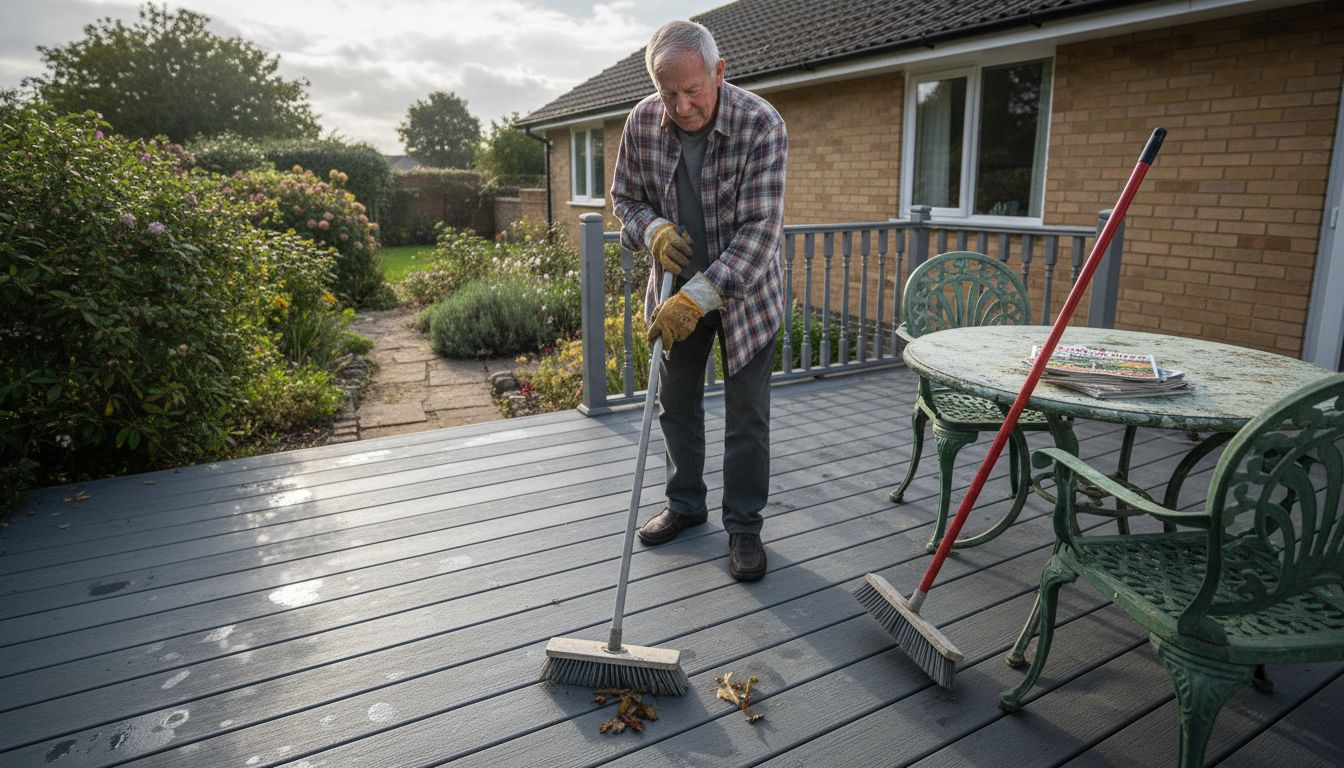
Recycled-plastic lumber requires no sealing, staining, painting, waterproofing, or insect-proofing at all. Simply brush it down occasionally and you’re done.
Why this matters for your home
Consider what you’re actually gaining beyond convenience. Low-maintenance decking reduces chemical use around your garden, eliminates toxic treatments seeping into soil, and means fewer weekends lost to maintenance labour. For busy professionals and families juggling commitments, this freedom is genuinely valuable.
You also avoid the hidden costs that pile up silently. Traditional timber demands replacement boards every 10-15 years as rot sets in. Composite alternatives keep performing reliably for 25-30 years with virtually no degradation.
Low-maintenance decking doesn’t just save time—it saves money, reduces chemical exposure, and protects your garden’s long-term value.
The environmental benefit matters too. Sustainable options mean you’re not contributing to deforestation, and recycled-plastic materials give waste a second life rather than heading to landfill.
Pro tip: When choosing your decking, check the warranty against fading and staining—this reveals how confident manufacturers are about durability, and it protects your investment if the material underperforms in your specific garden conditions.
Types of Low Maintenance Decking Materials
When you start exploring low-maintenance decking options, you’ll discover several material choices—each with distinct advantages for UK gardens. Understanding what sets them apart helps you pick the right fit for your space, budget, and lifestyle.
Composite Decking
Composite decking remains the most popular choice for homeowners wanting genuine low-maintenance performance. This material combines recycled wood fibres and plastic to create boards that resist rot naturally whilst requiring only mild cleaning. You’ll never sand, stain, or seal composite decking—it handles British weather without those endless upkeep cycles.
Composite variations exist to suit different priorities:
- Standard composites offer durability at moderate cost
- Capped composites add a protective layer that resists fading and discoloration brilliantly
- Hollow-core boards reduce weight for easier installation
- Solid-core options provide maximum durability for high-traffic gardens
The wood pulp mixed with recycled plastics creates boards that resist warping, cracking, and environmental damage far better than traditional timber. Though costs run higher than wood initially, the reduced upkeep and 25-30 year lifespan justify the investment quickly.
Plastic Wood Alternatives
Fully plastic decking boards use no wood content whatsoever. These perform exceptionally well in damp climates and near coastal areas where salt spray corrodes traditional materials. Maintenance involves basic sweeping and occasional hose-downs—genuinely minimal effort.
Plastic boards feel slightly different underfoot compared to composite options, and some homeowners find them less aesthetically warm. However, they absolutely outlast wood and composite in harsh conditions.
Treated Timber
Whilst not strictly “low-maintenance,” pressure-treated timber occupies a middle ground between traditional wood and composites. Modern treatments extend timber lifespan to 15-20 years with occasional resealing.
However, treated timber still demands regular maintenance—you’re simply doing less of it. For genuinely low-maintenance gardens, composite remains the superior choice.
Here’s how popular decking materials differ in durability, maintenance needs, and suitability for UK gardens:
| Decking Material | Lifespan Estimate | Maintenance Frequency | Ideal Use Case |
|---|---|---|---|
| Composite | 25-30 years | Minimal, easy tasks | High-traffic, wet climates |
| Plastic (Fully) | 30+ years | Rare cleaning only | Coastal, damp environments |
| Treated Timber | 15-20 years | Occasional resealing | Budget-friendly, rustic look |
| Traditional Timber | 10-15 years | Frequent upkeep | Aesthetic value, DIY projects |
Composite decking eliminates sanding, staining, and sealing entirely—perfect for busy homeowners who’d rather use their garden than maintain it.
Making Your Choice
Consider these factors when selecting materials:
- Climate exposure (coastal, wet, or dry areas)
- Budget constraints and long-term value
- Aesthetic preferences (warmth of composite versus uniformity of plastic)
- Foot traffic intensity
- Pet or children usage patterns
Pro tip: Check the warranty period and stain-resistance guarantees before purchasing—manufacturers confident in their products offer longer warranties, and this protection proves invaluable if your decking underperforms in your specific garden conditions.
Essential Qualities and Everyday Upkeep
Low-maintenance decking doesn’t mean zero maintenance—it means maintenance you can actually manage without professional help or specialist equipment. The key difference lies in what “upkeep” actually involves compared to traditional timber.
What Makes Quality Low-Maintenance Decking
The best low-maintenance materials share specific characteristics that reduce your workload dramatically. Look for boards that resist fading, staining, and moisture infiltration without surface treatments.
Quality decking should deliver:
- Colour stability that won’t fade noticeably after five years of British sunshine
- Stain resistance that lets you clean spills without permanent marks
- Structural integrity that won’t warp, crack, or splinter under pressure
- Slip resistance for safety even when wet
- UV protection built into the material rather than applied as coating
These features separate genuine low-maintenance products from budget alternatives that merely promise convenience. When manufacturers stand behind their boards with 15-25 year warranties, you know the material performs reliably.
Real Everyday Upkeep
Actual maintenance work involves minimal effort and no specialist knowledge. Most months, you’ll simply brush debris away and perhaps hose the deck down during dry weather.
Routine tasks include:
- Sweep leaves and dirt weekly during autumn
- Rinse with water monthly to prevent algae buildup
- Clean stains promptly with mild soap solution
- Check fasteners annually for any looseness
- Clear guttering nearby to prevent water pooling
That’s genuinely it. No sanding. No sealing. No toxic chemicals. No weekend projects stretching into month-long commitments.
Seasonal Considerations
British weather demands minimal seasonal adjustments. Winter brings moisture and potential moss growth on north-facing sections. A gentle brush or low-pressure wash solves this easily.
Spring requires checking for winter debris trapped between boards. Summer heat occasionally brings out surface dust that washes away instantly. Autumn leaves need regular sweeping to prevent moisture retention.
Quality low-maintenance decking demands roughly 2-3 hours of actual work annually—less time than traditional decking needs in a single season.
Warning Signs to Watch
Even quality decking needs attention if problems emerge. Watch for persistent algae growth, which suggests poor drainage rather than decking failure. Check underneath occasionally for water pooling or debris accumulation that might trap moisture.
Loose fasteners need tightening before they worsen. Cracks appearing after year one suggest manufacturing defects rather than normal wear.
Pro tip: Invest in a garden hose with an adjustable spray nozzle—this becomes your primary maintenance tool, and using gentle water pressure prevents damage whilst cleaning effectively far better than stiff brushing alone.
Low Maintenance Decking vs Timber Boards
Choosing between traditional timber and low-maintenance composite decking feels straightforward until you start calculating actual costs. The decision hinges on what you value most: initial price, long-term investment, or your personal time.
The Timber Reality
Traditional wooden decks offer undeniable charm. Natural timber feels warm underfoot, looks authentically organic, and costs less upfront than composite alternatives. Many homeowners love this aesthetic and accept the maintenance burden as part of ownership.
However, timber demands relentless care. You’re committing to sealing every 2-3 years, treating for rot and insects regularly, and replacing damaged boards frequently. Over a 25-year period, these costs accumulate dramatically—both financially and in your time.
Timber deteriorates predictably. Rot develops beneath the surface before becoming visible. Insects colonise unnoticed. Warping happens gradually, creating trip hazards. Routine maintenance preserving strength and appearance) requires consistent effort that most busy homeowners underestimate.
Low-Maintenance Composites Comparison
Composite decking eliminates the endless maintenance cycle. You’re not sealing, staining, or treating for pests. Composite materials offer resistance to cracking, splintering, and warping, which removes the primary timber problems entirely.
Yes, composites cost more initially. But spread that cost across 25-30 years of minimal upkeep, and the economics shift dramatically. You’re not buying new materials every decade or hiring professionals for repairs.
Key differences emerge in daily life:
- Composites need only mild cleaning versus timber’s intensive sanding and resealing
- Colour stability means no fading into weathered grey over five years
- No splinters affecting children or pet paws
- No seasonal rotting concerns or insect infestations
- Fasteners stay tight without constant attention
The Real Cost Comparison
Initial investment favours timber by roughly 30-40%. But that advantage disappears quickly once maintenance begins.
Timber costs over 25 years include sealing supplies (£300-600 every 2-3 years), replacement boards (£800-2000 per repair), professional treatments (£1000-3000 annually), and your labour.
Composite costs involve one initial investment plus minimal cleaning supplies and occasional fastener checks. Total 25-year cost typically favours composites by significant margins.
To help visualise long-term cost implications, here’s a breakdown comparing timber and composite decking over 25 years:
| Cost Aspect | Timber Boards | Composite Decking |
|---|---|---|
| Upfront Cost | Lower (£30-50/m²) | Higher (£50-70/m²) |
| Maintenance Supplies | £300-600 every 3 years | Minimal, occasional only |
| Replacement Boards | £800-2000 per repair | Rarely needed |
| Professional Labour | £1000-3000 yearly | Not required in most cases |
| Lifetime Cost (est.) | High and recurring | Lower, one-off |
Timber demands your time repeatedly; composites demand your money once, then leave you alone.
When Timber Makes Sense
Traditional timber suits you if aesthetics matter more than convenience, you enjoy maintenance tasks, or budget constraints demand lowest upfront cost regardless of future expense.
Pro tip: Request a cost-of-ownership breakdown from suppliers—asking them to calculate 25-year expenses including maintenance materials, professional treatments, and board replacements reveals the true financial picture rather than relying on initial price tags alone.
Long-Term Costs and Common Pitfalls
Low-maintenance decking demands a higher upfront investment than traditional timber, but understanding where costs accumulate later reveals why this investment typically pays dividends. The real financial picture emerges when you account for what actually happens over 25 years.
The Hidden Cost Trap
Many homeowners focus exclusively on initial purchase price, overlooking the expenses that compound silently. Long-term costs include higher upfront expenditure compared to pressure-treated wood, yet reduced repairs, staining, and sealing generally result in lower lifetime costs overall.
This paradox confuses people. Composites cost £50-70 per square metre installed. Pressure-treated timber costs £30-50. Over a 30-square-metre deck, that’s a £600-1200 difference initially. Sounds significant until you calculate what timber demands.
Over 25 years, timber requires:
- Sealing materials and labour: £400-800 every 2-3 years
- Board replacement for rot or warping: £1500-4000 total
- Pest treatments and preventative services: £500-2000 total
- Your time investment in maintenance
Composites eliminate virtually all these ongoing expenses.
Installation Mistakes That Cost Dearly
Premature composite failure rarely stems from material defects—it comes from installation errors. Improper installation, especially incorrect fastening or joist spacing, can cause warranty invalidation and decking failure.
Common installation pitfalls include:
- Spacing boards too tightly, preventing expansion movement
- Using incorrect fastener types or spacing fasteners improperly
- Ignoring manufacturer joist specifications
- Skipping expansion gap allowances between boards
- Installing without adequate ventilation underneath
These mistakes don’t reveal themselves immediately. They emerge after one summer when boards buckle, or after winter when gaps appear between boards. By then, correcting problems costs thousands in labour.
Expansion and Contraction Reality
Composite materials expand and contract with temperature changes more than timber. Overlooking manufacturer installation instructions or skipping routine cleaning can reduce lifespan significantly.
Proper installation includes spacing requirements that seem excessive when you’re installing—typically 5-10mm gaps between boards. These aren’t design flaws; they’re structural necessities. Ignoring them guarantees failure.
Installation quality matters more than material quality—perfect composites installed badly fail faster than adequate timber installed properly.
Maintenance Neglect Pitfall
Low-maintenance doesn’t mean zero maintenance. Skipping occasional cleaning allows algae and mould growth that traps moisture, accelerating deterioration. Some homeowners install premium composites then abandon them, creating the very problems composites were meant to prevent.
Routine cleaning takes 2-3 hours annually. Skipping this false economy ultimately ruins your investment.
Pro tip: Hire experienced installers specifically trained in composite decking—their expertise in spacing, fastening, and ventilation prevents costly warranty disputes and premature failure, making their labour cost trivial compared to reconstruction expenses later.
Discover Effortless Outdoor Living with Low Maintenance Decking Solutions
Tired of spending weekends sanding, sealing, and replacing rotting timber boards? Low maintenance decking offers the freedom to enjoy your garden without the constant upkeep and hidden costs traditional timber demands. At Deckkingdom.co.uk, we understand the challenges raised by fading, cracking, and frequent maintenance cycles described in the article. Our range of premium composite decking and outdoor construction materials deliver long-lasting durability, resistance to weather and insects, and a near-zero maintenance routine tailored for busy UK homeowners who want their outdoor space to stay beautiful and safe for decades.

Explore how our expertly curated products can transform your garden into a hassle-free retreat. Benefit from free samples, quick nationwide delivery, and practical installation guides that empower you to avoid common pitfalls such as poor installation or neglect. Take control of your outdoor renovation with confidence by visiting Deckkingdom.co.uk. Start your journey to low-maintenance decking today and reclaim your leisure time while protecting your investment for years to come through our trusted solutions and friendly support.
Browse our comprehensive offerings now at Deckkingdom.co.uk and see firsthand why thousands choose us for their decking needs.
Frequently Asked Questions
What is low maintenance decking?
Low maintenance decking refers to outdoor boarding materials that require minimal upkeep, allowing homeowners to enjoy their gardens without the constant need for sealing, staining, or treating against weather and insect damage.
What are the benefits of choosing low maintenance decking?
Choosing low maintenance decking saves time and money by reducing the need for frequent maintenance activities, lowering chemical exposure, and maintaining the decking’s aesthetic value over a longer lifespan.
How long does low maintenance decking typically last?
Low maintenance decking, particularly composite options, can last between 25 to 30 years with minimal degradation, whereas traditional timber decking often requires replacement every 10 to 15 years.
What materials are used in low maintenance decking?
Low maintenance decking is primarily made from recycled plastic composites, wood-plastic blends, and fully plastic boards, all designed to resist weather, moisture, and insect damage while requiring only basic care.

2 responses