
TL;DR:
- UV rays cause early deterioration of decking materials by breaking down lignin and polymers, leading to warping, fading, and cracking. UV-resistant decking incorporates specific technologies like absorbers, HALS, antioxidants, and polymer caps to extend lifespan and maintain appearance. Proper installation and routine maintenance significantly maximize the performance and durability of UV-protected decks over time.
Not all decking ages the same way. Many homeowners install standard timber or basic composite boards and are surprised to find them warped, faded, or cracked within just a couple of seasons. The culprit is almost always ultraviolet light. UV rays are relentless, even in the UK’s mixed climate, and they silently break down decking materials long before the weather or foot traffic does. Understanding the difference between standard and UV-resistant decking can save you significant money, time, and frustration over the lifetime of your outdoor space.
Key Takeaways
| Point | Details |
|---|---|
| UV damage explained | Sunlight breaks down decking at a chemical level, causing fading and cracking. |
| Tech behind protection | Modern UV-resistant decking uses special caps and additives to block or absorb harmful rays. |
| Long-term savings | Although costlier upfront, UV-resistant options need less maintenance and last years longer. |
| Choose wisely | Select decking based on your garden’s exposure, style, and how much time you want to spend on upkeep. |
Why UV rays damage outdoor decking
Sunlight contains ultraviolet radiation, which carries enough energy to disrupt chemical bonds inside materials. In wood, this process destroys lignin, the natural compound that holds wood fibres together and gives timber its warm, golden tone. Once lignin breaks down, wood fibres become loose, the surface turns grey, and the board becomes brittle and prone to splitting. In composite decking, UV rays cause photodegradation by breaking down both lignin in wood fibres and the polymer binders that hold composite boards together.
What many homeowners do not realise is that moisture and UV work as a team against your decking. Water seeps into micro-cracks created by UV damage, then freezes and expands in winter. This cycle of cracking, wetting, and freezing accelerates surface deterioration far faster than either factor would cause alone. You can learn more about weatherproof decking methods to understand how these two forces interact and how to counter them.
Key signs of UV damage in your decking include:
- Fading or greying of the surface colour
- Surface cracking or splintering, especially along the grain
- Boards becoming soft or spongy in certain spots
- A chalky, bleached appearance after prolonged sun exposure
- Warping or cupping, particularly on south-facing decks
“A south-facing deck in the UK receives enough UV exposure over five years to visibly degrade an unprotected timber surface, even without extreme heat.”
What makes decking UV-resistant?
UV resistance is not simply a marketing term. It refers to specific technologies built into the material to intercept or neutralise the damage that UV rays would otherwise cause. UV-resistant decking uses UV absorbers, HALS, antioxidants, and protective polymer caps to protect core materials from photodegradation.
Here is what each of those actually does:
- UV absorbers convert incoming UV radiation into harmless heat energy before it can break down material bonds
- HALS (hindered amine light stabilisers) neutralise unstable free radicals that form when UV light hits the surface
- Antioxidants slow down the oxidation reactions that cause discolouration and surface degradation
- Protective polymer caps form a sacrificial outer shell, absorbing UV stress while protecting the structural core of the board
The most effective modern boards combine all four of these protections. This is why capped composite decking outperforms uncapped alternatives so significantly over time. You can read a detailed capped decking explanation to understand exactly why that outer shell makes such a measurable difference.
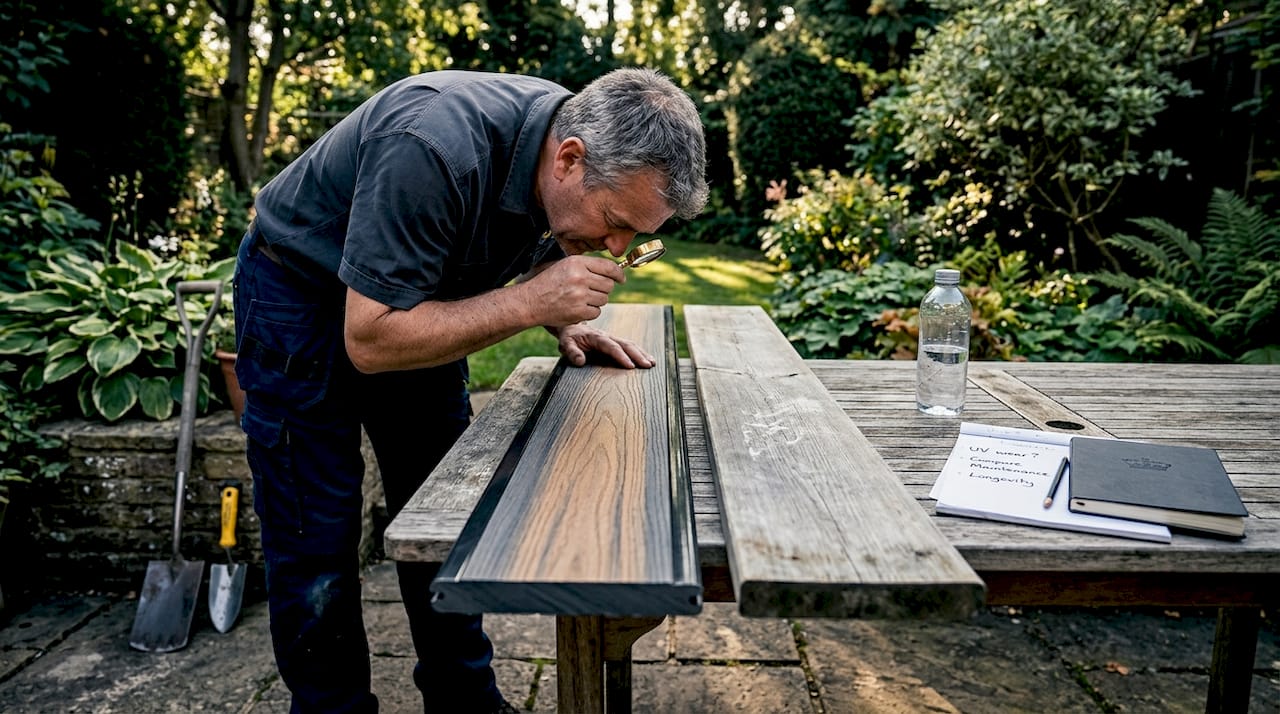
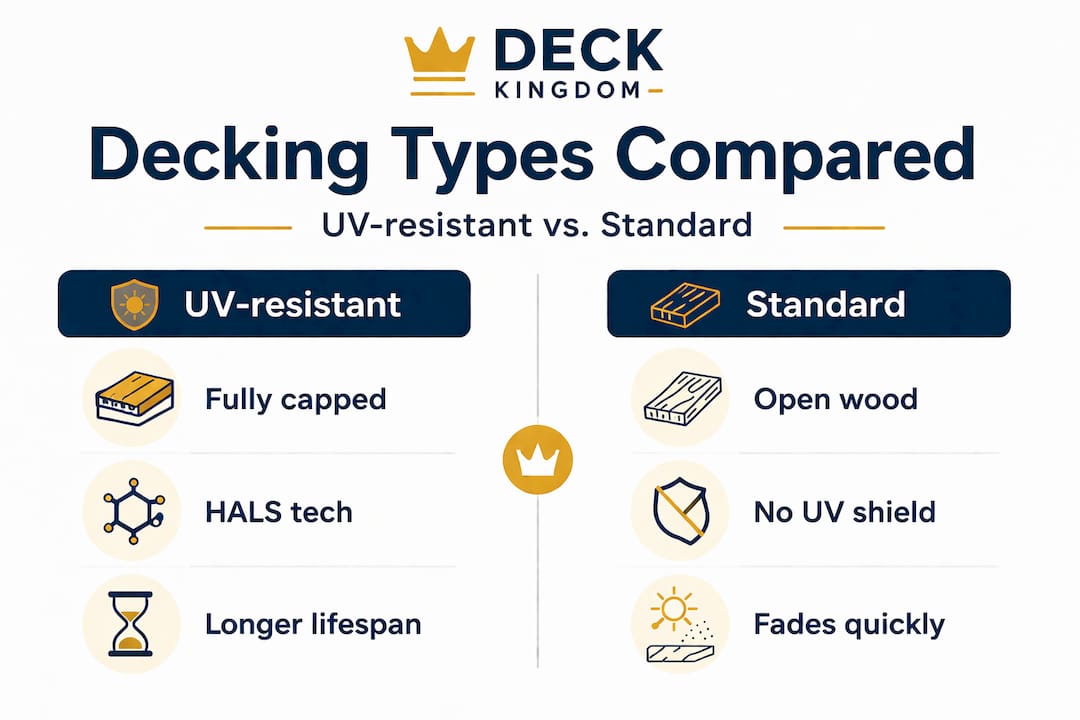
| Feature | UV-resistant decking | Standard decking |
|---|---|---|
| UV absorbers built in | Yes | No |
| HALS technology | Yes | Rarely |
| Polymer capping | Yes (capped boards) | No |
| Fade resistance | High | Low to moderate |
| Recoating required | Rarely | Every 1 to 3 years |
Pro Tip: When comparing products, ask specifically whether the board is “fully capped” on all four sides or only on the top surface. A fully capped board offers significantly better long-term UV protection across its entire profile.
Comparing UV-resistant and standard decking
The practical differences between UV-resistant and standard decking become very apparent once you look at real-world performance over several years. Capped shells and additives in UV-resistant decking significantly extend the deck’s usable life and maintain its appearance through seasons of rain, frost, and sunshine.
| Category | UV-resistant decking | Standard timber decking |
|---|---|---|
| Expected lifespan | 25 to 30 years | 10 to 15 years with maintenance |
| Annual maintenance cost | Low (occasional cleaning) | High (oiling, staining, repairs) |
| Colour retention | Excellent over decades | Poor without regular treatment |
| Upfront cost | Higher | Lower |
| Long-term value | Better | Lower |
When choosing weatherproof decking, consider these five factors in order of importance:
- Sun exposure level of your specific garden or patio area
- Budget over ten years, not just the initial purchase price
- Colour and finish preferences, and how well each material retains them
- Maintenance time you are realistically willing to commit each year
- Structural performance, including resistance to warping under heat and moisture
Using decking comparison tools can simplify this process significantly by letting you filter options based on exactly these criteria. For a deeper look at what separates lasting boards from those that fail prematurely, the guide to decking durability explained is worth reading before you make any final decision.
Caring for UV-resistant decking: what to expect
One of the most compelling reasons homeowners upgrade to UV-resistant decking is the dramatic reduction in maintenance effort. UV-resistant composite decks require less frequent cleaning and rarely need staining compared to standard wood, which typically demands oiling or staining every one to three years just to stay presentable.
That said, no deck is entirely self-sufficient. A simple routine keeps UV-resistant boards performing well for decades:
- Sweep away leaves, debris, and organic matter regularly to prevent mould forming in damp corners
- Wash the surface two to three times per year using warm water and a mild soap solution
- Rinse with a garden hose or low-pressure washer to remove residue
- Remove any food spills or grease promptly to prevent staining on porous joints
What you should never use on UV-resistant composite decking includes bleach-based cleaners, solvent-based products, and high-pressure jet washing at close range. These can strip the protective polymer cap and expose the core material to the very UV damage you paid to prevent.
Pro Tip: Autumn is the most important time for a thorough clean. Wet leaves sitting on composite boards over winter can cause persistent tannin staining that becomes much harder to remove come spring.
Keeping an eye on early wear signs is also worthwhile. If you notice light surface scuffing or colour variation in heavy traffic areas, a detailed decking maintenance process can help you address it early. For UK-specific advice, the guides on maintaining composite decking and the composite decking maintenance guide offer practical, step-by-step help suited to our climate.
How to choose the right UV-resistant decking for your home
Different UV-resistant decking solutions suit varying budgets, aesthetics, and usage needs, so there is no single right answer. The best choice depends on honest answers to a few specific questions about your garden and how you use it.
- Where does direct sunlight hit your garden? South and west-facing areas need the highest UV protection ratings.
- What is your realistic ten-year budget? A higher upfront cost often means lower overall spending when you factor out ongoing treatments and repairs.
- What finish appeals to you? Modern UV-resistant boards come in a wide range of wood-effect finishes and solid contemporary colours. The composite decking colour options guide shows which shades hold their tone best over years of exposure.
- Are you installing yourself or hiring a professional? DIY installation is achievable with quality composite boards, but professional fitting reduces the risk of gaps and moisture ingress that accelerate wear.
| Scenario | Recommended approach |
|---|---|
| South-facing garden, heavy use | Fully capped composite with HALS |
| Shaded patio, occasional use | Uncapped composite or treated hardwood |
| Coastal location | Fully capped composite with salt resistance |
| Budget-conscious, moderate sun | Entry-level capped composite |
The industry view: UV resistance is just one piece of the puzzle
Here is something the industry does not always say clearly enough. UV resistance is genuinely valuable, and the technology behind it is real. But we have seen plenty of high-specification decking fail early because the installation was done poorly or the owner assumed “low maintenance” meant “no maintenance.”
Capped shells and UV-protective additives cannot compensate for poor installation or lacklustre cleaning in the long run. If boards are fixed without adequate drainage gaps, water pools under the surface and rots the subframe. If leaves are left to decompose on the surface for months at a time, even the best polymer cap develops staining. The deck looks neglected and fades faster than it should.
The honest truth is that “low maintenance” means less maintenance, not zero. The homeowners who get 25 to 30 years out of their UV-resistant composite boards are the ones who do a proper clean twice a year and keep the surface clear of debris. It takes very little time. But it does take consistency. Following a sound guide to decking care essentials is the single most reliable way to protect any investment you make in quality outdoor decking.
Find the ideal UV-resistant decking and accessories
Upgrading to UV-resistant decking is a smart, long-term investment for any UK garden or patio, and getting the right product makes all the difference.
At Deckkingdom, we stock a wide range of UV-resistant composite decking solutions to suit different budgets, styles, and garden sizes. Once your boards are in place, the right finishing touches matter too. Our range of composite decking end caps protect exposed board ends from UV and moisture ingress, and our full range of decking accessories ensures a clean, professional finish. If you want to get started straight away, our guide on fitting composite decking walks you through installation step by step.
Frequently asked questions
How do I know if my decking is UV-resistant?
Look for product labels mentioning UV absorbers, HALS, or polymer caps, and ask your supplier directly for UV performance specifications before purchasing.
Can I improve UV protection on existing decks?
You can apply specialist UV-protective oils or coatings to existing timber, though these require regular reapplication and cannot fully replicate the performance of polymer caps and UV-absorbing treatments built into the board during manufacture.
Is UV-resistant decking more expensive?
Yes, the upfront cost is higher, but capped shells and additives extend usable life and reduce ongoing upkeep costs significantly, making the total spend over ten or twenty years competitive with cheaper alternatives.
Do I need to clean UV-resistant decking?
Gentle, regular cleaning is still necessary, but UV-resistant composite decks require less frequent cleaning than standard wood, and staining or deep scrubbing is rarely needed when maintenance routines are kept consistent.

One Response