
TL;DR:
- Double sided decking offers two usable surfaces on each board, enhancing design flexibility and longevity.
- It provides practical benefits such as easier maintenance, cost savings, and resistance to weather-related damage.
- Many homeowners value its long-term adaptability and increased home appeal, especially in UK outdoor spaces.
Most homeowners assume a decking board has one face and that’s the end of it. But double sided decking turns that assumption on its head, giving you two distinct usable surfaces on every single board. Whether you’re upgrading a tired patio, creating a new garden path, or designing a full outdoor entertaining area, understanding what double sided decking offers could change how you plan and budget your entire project.
Key Takeaways
| Point | Details |
|---|---|
| Flexible design | Double sided decking lets you swap between different finishes and looks easily. |
| Durable and low maintenance | Composite options resist UK weather and require little upkeep compared to timber. |
| Long-term value | Reversible boards last longer and can reduce overall garden renovation costs. |
| Simple care essentials | Regular cleaning and flipping damaged boards keep your decking fresh for years. |
What is double sided decking?
Double sided decking, also called reversible decking, refers to boards manufactured with two finished surfaces rather than one. Each face typically features a different texture or style, so you can choose which side faces up during installation. This isn’t a gimmick or a minor variation on standard boards. It’s a genuinely different product category that double-sided benefits for UK homes have made increasingly popular across patios, garden terraces, and pool surrounds.
The key distinction is design flexibility built directly into the board itself. One face might carry a wood grain embossed texture for a natural look, while the reverse offers a smooth, contemporary finish. You choose at the point of installation which side suits your space, and you can flip the boards later if your needs or tastes change.
Common uses in the UK include:
- Patios and garden terraces where aesthetic choices matter long term
- Garden paths and walkways that benefit from a textured, slip-resistant surface
- Family decks where wear patterns develop over time and reversibility offers a practical reset
- Balconies and raised platforms where a lighter, smoother finish might be preferred
Pro Tip: Don’t assume reversible means you’ll be constantly flipping your boards. Most homeowners choose one face and stick with it for years. The real value is that you have a genuine choice at the start, and a practical option in reserve if the surface ever needs refreshing.
Main types and materials of double sided decking
With the basics covered, the next step is understanding the practical choices you’ll face when selecting double sided decking. The three primary material categories are composite, natural wood, and PVC or polymer boards, and each behaves quite differently in a UK garden setting.
Composite decking is by far the most popular choice for reversible boards. Made from a blend of wood fibre and recycled plastic, weatherproof decking options in composite form resist moisture, UV fading, and the freeze-thaw cycles that are so common in British winters. Because composite boards are manufactured under controlled conditions, both faces can be finished to an equally high standard, making genuine reversibility far more practical than with natural timber.
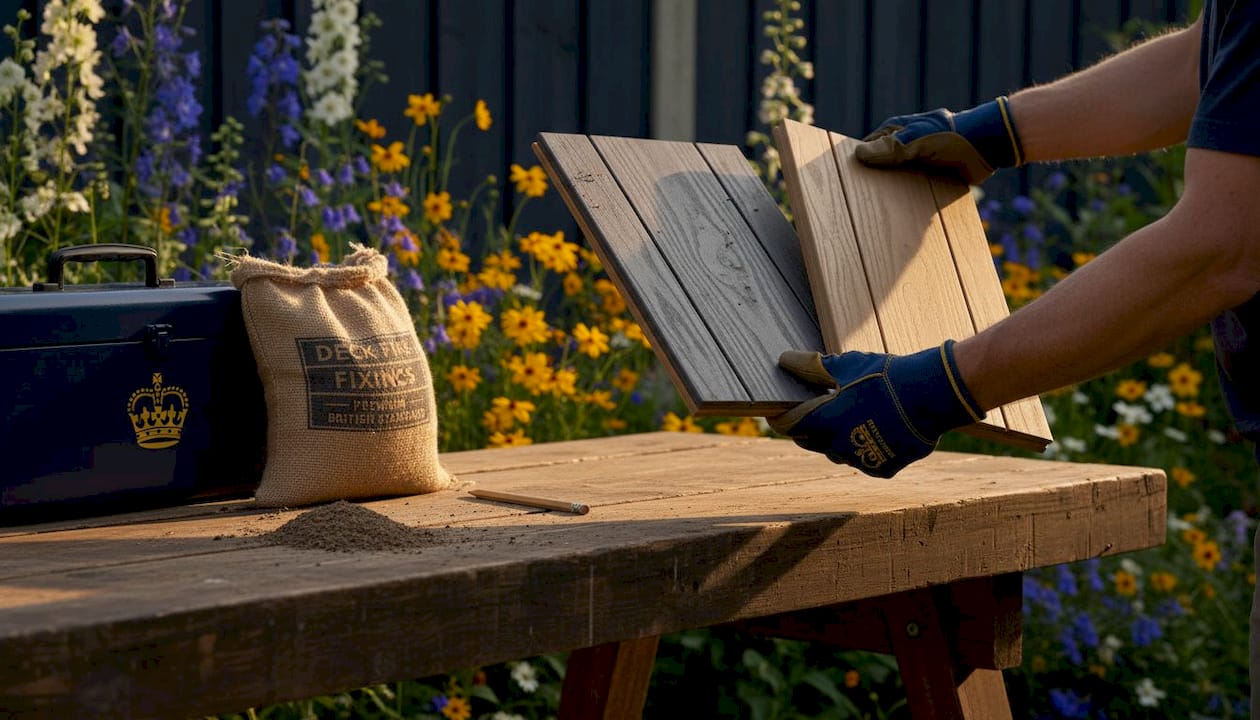
Natural wood boards can technically have two sanded faces, but the reality is that untreated or even treated timber weathers unevenly. Grain, knots, and moisture absorption vary by side, so true reversibility is less reliable. If you love the look of real wood, it’s worth weighing that against the long-term practicalities.
PVC and polymer boards offer excellent water resistance and are genuinely low maintenance, but the range of finishes and textures can be more limited compared to composite options.
| Material | Maintenance | Lifespan | Reversibility | Eco-friendliness |
|---|---|---|---|---|
| Composite | Very low | 25+ years | Excellent | High (recycled content) |
| Natural wood | High | 10 to 15 years | Moderate | Moderate |
| PVC/polymer | Low | 20+ years | Good | Lower |
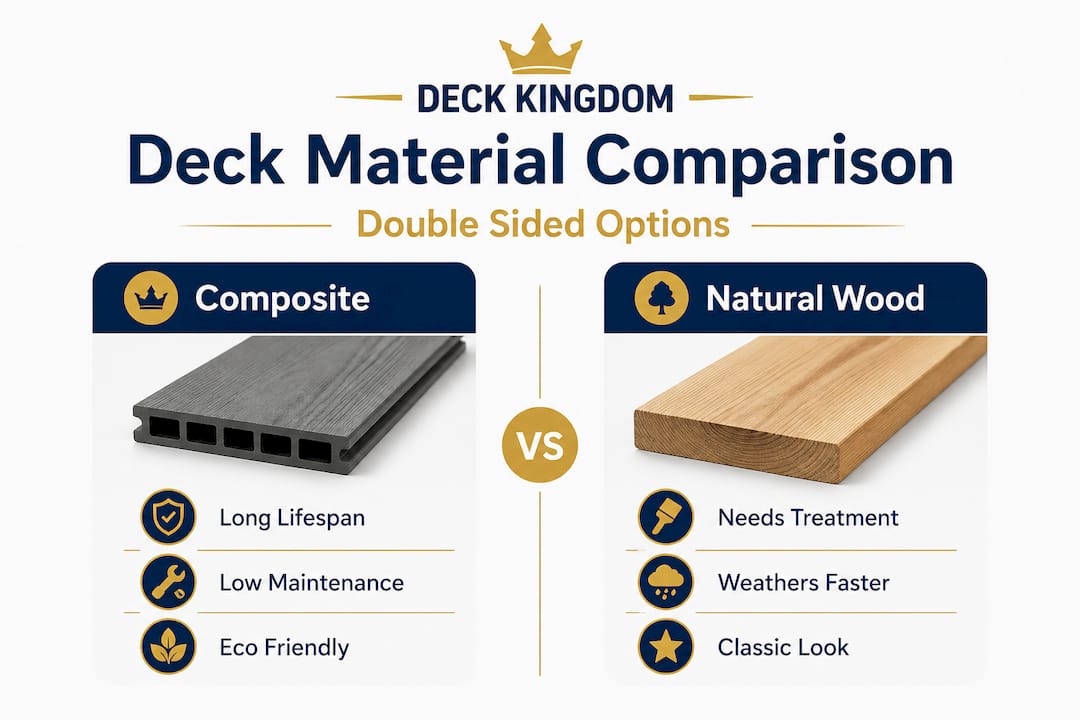
Using decking comparison tools can help you weigh these options against your specific garden layout, budget, and style goals before committing to a purchase.
Pro Tip: Consider where your decking will be placed before choosing a finish. A smooth face works well in sheltered, dry areas, while a deeply grooved or textured face offers better grip in exposed, wet spots. With double sided boards, you get both options in one product.
Key benefits of double sided decking for UK gardens
Once you know the types available, it becomes clearer why so many UK homeowners opt for double sided decking. The advantages go well beyond aesthetics.
-
Extended visual lifespan. Reversible decking features allow homeowners to switch between two surfaces, effectively extending the deck’s visual lifespan and adaptability. Rather than replacing boards when one face looks worn, you simply flip them for a fresh appearance.
-
Design flexibility without extra cost. You’re essentially getting two distinct looks from a single set of boards. If you redecorate your garden furniture or change your planting scheme, you can choose the face that complements your new style without buying new decking.
-
Lower long-term costs. A deck that can be refreshed by reversing the boards needs replacing far less often than a single-sided alternative. Over a 20-year period, this can represent a meaningful saving, particularly when you factor in labour and disposal costs.
-
Practical recovery from accidental damage. Scuffs from moving furniture, UV bleaching in particularly sunny summers, or water staining after a harsh winter can affect one face more than another. Reversibility gives you a practical route back to a pristine-looking surface without any cost beyond the time to flip and refit.
-
Weather resilience. UK gardens face damp springs, occasional frost, and unpredictable summers. Composite double sided boards are specifically engineered to handle these conditions on both faces, so neither surface deteriorates faster than the other.
“From our experience, homeowners who choose composite reversible boards consistently report greater satisfaction over a five to ten year period, mainly because they feel in control of how their space looks and how much they spend maintaining it.”
This flexibility is what separates double sided decking from other garden upgrade options. It isn’t just a product feature. It’s a long-term strategy for a better-looking, better-value garden.
How to care for double sided decking
To get the best results from your decking investment, it’s important to know a few simple care routines. Outdoor decking maintenance carried out correctly ensures reversible decking lasts longer and maintains its appearance across both surfaces.
Here’s what a good care routine looks like:
- Clean at least twice a year, ideally in spring and autumn. Use a soft-bristled brush or a low-pressure hose. Avoid pressure washers on high settings, as they can force water into the board’s structure and lift the surface finish.
- Use appropriate cleaning products. Mild soapy water works well for general grime. For stubborn stains, composite-specific cleaners are widely available and won’t damage the board’s surface. Check composite decking care tips for product guidance suited to the UK climate.
- Flip boards safely when needed. Before flipping, remove all fasteners carefully, label the boards so you can reinstall them in the correct order, and inspect both faces for any retained moisture or debris before reinstalling.
- Inspect and tighten fasteners. Hidden fasteners can loosen over time, particularly after a cold winter. Check them annually and replace any that show signs of corrosion.
- Check end caps. End caps seal the cut ends of your boards, preventing moisture ingress. If any caps have cracked or detached, replace them promptly to avoid the board absorbing water from the ends.
- Clear debris regularly. Leaves, moss, and dirt that collect between boards can hold moisture against the surface, which accelerates wear. A quick sweep every few weeks during autumn goes a long way.
Following safe decking installation principles also ensures that your boards have adequate ventilation underneath, which is critical for long-term performance.
Pro Tip: For minor scuffs or marks on the visible face, a gentle rub with a composite cleaning block can often restore the surface before you even consider flipping. Save the flip for when you genuinely want a fresh start.
Our take: Why double sided decking is an underrated upgrade
Most guides focus on the functional side of reversible decking and stop there. But there’s a bigger picture that rarely gets discussed, and it’s worth being direct about it.
The real argument for double sided decking isn’t that you’ll flip your boards every few years. Many homeowners never do. The real argument is that knowing you can changes how confident you feel about the purchase. It removes the anxiety of committing to one look for fifteen years. That psychological value is genuinely significant when you’re spending thousands of pounds on an outdoor space.
There’s also a resale angle that almost nobody mentions. When you’re selling your home, a deck with two well-maintained surfaces is far more appealing to potential buyers than a weathered single-sided board. It signals quality and longevity in a way that a fresh coat of decking oil on tired timber simply cannot.
We’ve also found that mixing board orientations during installation, running some boards lengthways and others in a herringbone or diagonal pattern, creates striking visual effects that are entirely unique to your space. With double sided boards, why reversible decking matters becomes a design conversation as much as a maintenance one.
Homeowners consistently underestimate how much ongoing flexibility is worth. Not just in cost savings, but in the simple satisfaction of having a garden space that can adapt as your life changes.
Explore quality double sided decking and accessories
Ready to transform your garden with the flexibility of double sided decking? Here’s where to start your project.

At Deck Kingdom, we supply a full range of composite double sided decking boards alongside everything you need to complete the job properly. Protect the cut ends of your boards with our range of composite decking end caps, which are essential for long-term moisture protection. Browse our full selection of decking accessories including hidden fasteners, edging strips, and cleaning kits. If you’re new to laying composite boards, our step-by-step guide to fitting composite decking walks you through the entire process from frame preparation to finishing. Free samples and expert advice are always available, so you can make a confident decision before committing.
Frequently asked questions
Is double sided decking more expensive than traditional decking?
Double sided boards can cost a bit more upfront, but they often save on replacement and renovation costs long term, making them better value over a full deck lifespan.
Can you use both sides of reversible decking straight away?
Yes, both faces are usable and fully finished from day one, giving you an immediate choice of look or texture at the point of installation. As reversible decking explained confirms, homeowners can switch between two surfaces whenever it suits them.
How often should I clean or maintain double sided decking?
Clean at least twice a year and check for wear regularly. As good practice in outdoor decking maintenance confirms, composite decks need the least intervention and are easiest to keep looking their best.
Is composite double sided decking suitable for the UK climate?
Yes. Composite boards are weatherproof and durable and specifically designed to resist moisture, UV exposure, and frost, making them an excellent fit for UK gardens year-round.
