

Decking fascia explained: what it is and why it matters
Decking fascia is a vertical board fitted around the outer edge of a deck to conceal the joists, framing, and fixings underneath. It sits flush with the top of your decking boards and covers the rim joist, giving the whole structure a clean, finished appearance. Beyond looks, fascia also protects the subframe from moisture, pests, and debris that would otherwise work their way into exposed timber. Without it, the structural skeleton of your deck is on full display, and no amount of beautiful decking boards overhead will disguise that.
Fascia plays two roles at once:
- Conceals joists, framing, and fixings around the deck perimeter
- Protects the substructure from rain, rot, and pest damage
- Creates a polished, professional finish that ties the whole deck together
- Hides any imperfect board cuts at the edges
- Can complement or contrast with your decking colour for a deliberate design effect
Pro Tip: Plan your fascia at the same time as your decking boards. Choosing both together means you can match colours and materials from the start, avoiding a mismatched finish later.
What materials are used for decking fascia in the UK?
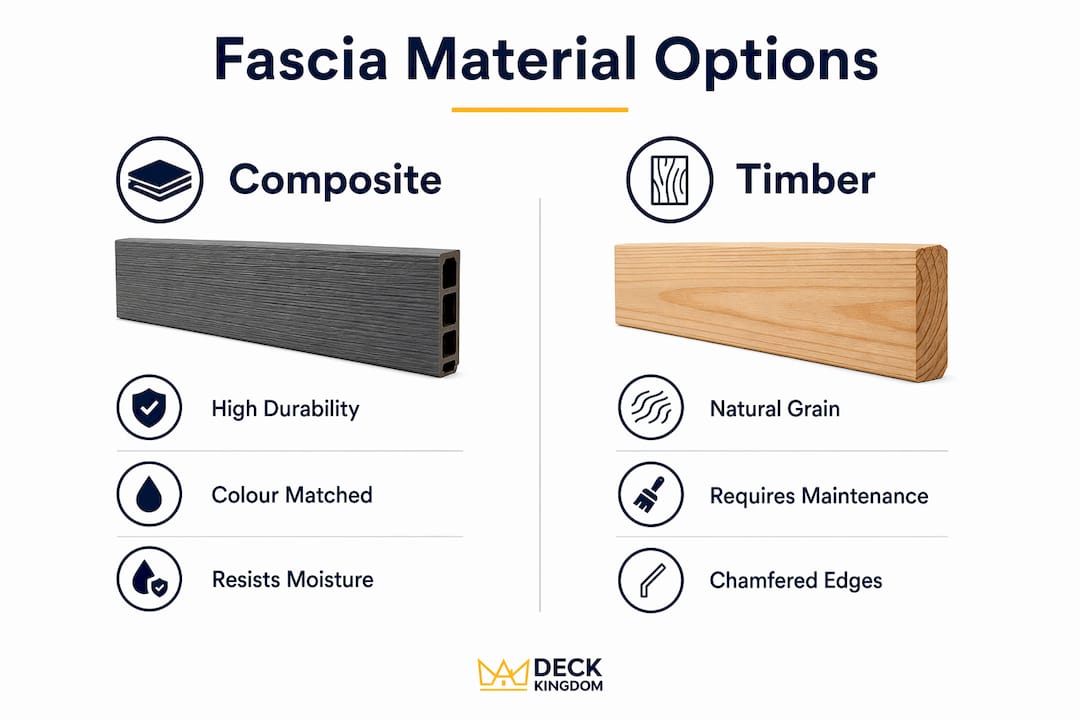
Choosing the right fascia material is just as important as picking your decking boards. Three options dominate the UK market: composite, PVC, and timber. Each has a different balance of durability, upkeep, and cost.
Composite fascia boards are the most popular choice for UK homeowners right now. They resist rot, hold their colour well in wet weather, and come in shades that match or complement most composite decking ranges. Maintenance is minimal: a wash down once or twice a year is usually all they need. PVC fascia shares many of those qualities and is particularly well suited to exposed or coastal gardens where moisture is a constant challenge. Timber fascia costs less upfront but needs regular sealing, staining, or painting to stay in good condition, and it can crack if left unsealed through a British winter.
One practical point worth knowing: specialised fascia boards are thinner than structural decking boards, and that is intentional. Using thinner boards for the perimeter saves money and gives a neater fit against the rim joist. You do not need a full structural board here because fascia carries no load.
| Material | Durability | Aesthetic finish |
|---|---|---|
| Composite | High; resists rot and moisture | Colour-matched to decking; consistent finish |
| PVC | Very high; won’t warp or split | Sleek, clean lines; wide colour range |
| Timber | Moderate; needs regular treatment | Natural grain; traditional appearance |
Timber boards, as noted in the Timber Decking Handbook, typically come with chamfered or eased edges to help shed water and reduce splintering. That detail matters for fascia too, since the board’s lower edge is often the first place water collects.
How to install fascia boards on your deck
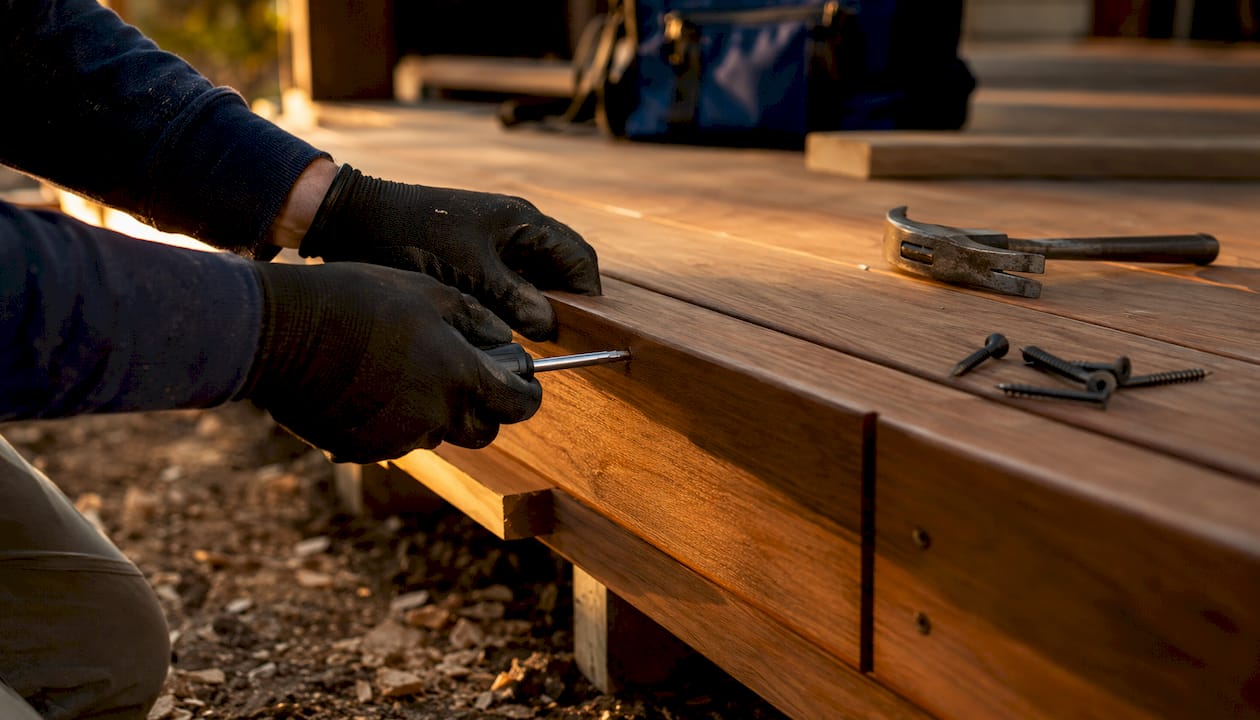
Fascia goes on after your decking boards are laid. The boards attach to the outside face of the rim joist, sitting flush with the top surface of the deck. Here is the standard process:
- Measure the rim joist length carefully before cutting your fascia to size
- Rip-cut the board if needed to match the height of the rim joist
- Position the board so the top edge sits flush with the walking surface
- Apply a good quality exterior-grade construction adhesive to the back of the board
- Fix with screws spaced regularly, with top and bottom screws positioned close to each edge
- Add a centred screw between each top and bottom pair to prevent bowing
Pro Tip: *When
, always keep the factory-finished edge facing upwards. The cut edge exposes the board’s core, and placing that face down protects it from moisture sitting at the base.*
Adhesive alone is not enough to hold fascia securely over time. Screw fixation is the recommended method, and using colour-matched screws keeps the finish looking tidy. For composite fascia specifically, Deck Kingdom’s composite batten guide covers compatible fixing options in more detail. Corner joints need particular care: mitre the corners at 45 degrees for a sharp, professional finish rather than butting boards together.
A useful trick from experienced builders: cut fascia from offcuts of your own decking boards. The colour match is perfect, and any boards rejected during laying get a second life as perimeter trim. It keeps costs down and the overall look cohesive.
Benefits of fascia boards and how to keep them looking good
Fascia boards do more than tidy up the edges. They actively shield the deck’s substructure from the elements, slowing the rate at which moisture and pests can reach the joists and posts beneath. A well-fitted fascia board extends the working life of the whole deck, not just its appearance.
Key benefits and maintenance points at a glance:
- Protects joists and framing from moisture, rot, and insect damage
- Hides unfinished edges and imperfect cuts for a cleaner look
- Adds a design element: match or contrast with your decking colour
- Composite and PVC boards need only occasional cleaning with soapy water
- Timber fascia requires annual inspection, resealing, or restaining
- Check fixings each spring for any signs of movement or corrosion
Composite and PVC fascia are particularly well suited to the UK’s wet climate. They do not absorb water, they will not warp through freeze-thaw cycles, and they hold their colour without fading badly over the years. For a practical overview of finish carpentry techniques that apply to fascia fitting, that resource covers the finer points of achieving clean edges and tight joins.
Pro Tip: Choose a fade-resistant composite or PVC fascia if your deck gets full sun for most of the day. UV exposure is the main cause of colour shift in outdoor boards, and a quality capped composite will hold its shade far longer than an uncapped alternative.
Timber fascia, while attractive, demands more from you. Inspect it every spring for cracks, splits, or areas where the sealant has worn away. Catching those early prevents water ingress that can spread to the joists below. If you want to avoid common decking mistakes, skipping the annual fascia check is one of the most frequent oversights homeowners make.
Ready to finish your deck properly? Deck Kingdom stocks a full range of composite decking accessories including end caps and fascia trim to complete your project. Browse the range or request a free sample to see the colours in your own garden before you buy.

Key takeaways
Decking fascia is a perimeter board that conceals the structural frame, protects the substructure from moisture and pests, and gives any deck a finished, professional appearance.
| Point | Details |
|---|---|
| What fascia does | Covers joists and rim joists around the deck perimeter for a clean finish. |
| Best material for UK gardens | Composite and PVC fascia resist moisture and need minimal upkeep. |
| Installation method | Fix with screws spaced regularly; keep factory edge facing up when rip-cutting. |
| Maintenance by material | Composite and PVC need occasional washing; timber needs annual sealing. |
| Plan it early | Choosing fascia alongside decking boards ensures a coordinated colour match. |
FAQ
What is the fascia on a deck?
Deck fascia is a vertical perimeter board that covers the outer rim joist and conceals the joists, framing, and fixings beneath the deck surface. It is sometimes called a rim joist cover or skirt board.
Is deck fascia necessary?
Fascia is not structural, so a deck will stand without it. Without fascia, though, the subframe remains exposed to weather and pests, and the deck looks unfinished.
What should I use for deck fascia in the UK?
Composite or PVC fascia boards are the most practical choice for UK conditions. Both resist moisture and require very little maintenance compared with timber.
How do you fit fascia on decking?
Attach fascia boards to the outside face of the rim joist after laying your decking, using construction adhesive and screws spaced evenly, with fixings positioned close to each edge.
