
Slip resistant decking significantly reduces outdoor fall injuries, with slip incidents on decking causing a quarter of all outdoor fall injuries in UK homes every year. This guide explains what slip resistant decking is, how it’s measured, which materials perform best in wet UK climates, and practical steps to maximise safety during your garden or patio renovation. Understanding these factors helps you choose decking that protects your family while withstanding British weather.
Key Takeaways
| Point | Details |
|---|---|
| Slip resistant decking reduces outdoor fall injuries | Slip incidents on decking cause 25% of all outdoor fall injuries annually in UK homes. |
| Pendulum Test Value (PTV) measures slip resistance | UK standards recommend minimum PTV scores of 36-40+ for safe residential decking surfaces. |
| Composite decking offers superior slip resistance | Composite materials achieve PTV scores of 40-50 with minimal maintenance compared to timber. |
| Regular maintenance preserves safety | Monthly cleaning during wet months and annual inspections maintain slip resistant properties long term. |
| Material choice impacts durability and cost | Modern composites balance aesthetics, safety, and affordability, debunking the high cost myth. |
Introduction to Slip Resistant Decking
Slip resistant decking refers to outdoor flooring surfaces engineered to minimize slip risk through specific textures, materials, and design features. British weather creates constant moisture exposure, making outdoor surfaces dangerously slippery without proper slip resistance. Rain, morning dew, frost, and algae growth transform ordinary decking into hazard zones.
Slip incidents on decking cause a quarter of all outdoor fall injuries in UK homes every year, making slip resistance a critical safety priority for patios and gardens. These accidents lead to serious injuries, particularly for children and elderly family members who use outdoor spaces regularly. Beyond immediate injury risk, liability concerns arise when guests slip on unsafe decking.
Homeowners planning garden renovations must prioritize slip resistance alongside aesthetics and durability. Slip resistant decking integrates into overall outdoor safety planning by addressing the most common accident cause in residential outdoor spaces. Choosing the right surface protects your investment while ensuring peace of mind during every season.
Key considerations include:
- Material selection based on certified slip resistance scores
- Surface texture appropriate for wet climate conditions
- Drainage design to prevent water pooling
- Maintenance requirements to sustain safety properties
- Budget alignment with long term durability and safety benefits
How Slip Resistance Is Measured: Understanding Standards
The British Pendulum Tester measures slip resistance scientifically, producing a Pendulum Test Value (PTV) that quantifies surface grip. This standardized device simulates a shoe sole sliding across wet decking, measuring friction levels objectively. Higher PTV scores indicate greater slip resistance and safer surfaces.
UK Building Regulations reference PTV standards to establish minimum safety thresholds for outdoor residential surfaces. Industry experts recommend PTV scores of 36-40+ for safe decking in home gardens and patios. Scores below 35 classify as high slip risk, particularly dangerous in wet British conditions. Commercial spaces require even higher PTV minimums due to heavier foot traffic.
Homeowners should verify PTV certification before purchasing decking materials. Reputable manufacturers provide test results and documentation proving their products meet UK safety standards. This transparency allows you to compare options objectively rather than relying on marketing claims alone.
Key measurement factors include:
- Testing conducted on wet surfaces to simulate real world conditions
- Multiple test locations across sample boards to ensure consistency
- Regular retesting to verify slip resistance remains stable over time
- Independent laboratory certification rather than manufacturer self testing
- Clear labeling of PTV scores on product specifications
Materials and Surface Treatments That Enhance Slip Resistance
Composite decking delivers superior slip resistance compared to traditional timber, achieving PTV scores of 40-50 through engineered surface textures. These materials blend wood fibers with polymer resins, creating surfaces that maintain grip even when wet. The manufacturing process allows precise control over texture depth and pattern, optimizing safety without compromising appearance.
Timber decking typically scores below 35 PTV, especially when wet or aged. Natural wood becomes increasingly slippery as weathering smooths the grain and algae colonizes the surface. While beautiful initially, timber requires frequent treatment and replacement to maintain minimal safety standards. PVC decking ranges from 30-38 PTV for smooth finishes, though textured PVC can reach 40+ with specialized surface treatments.
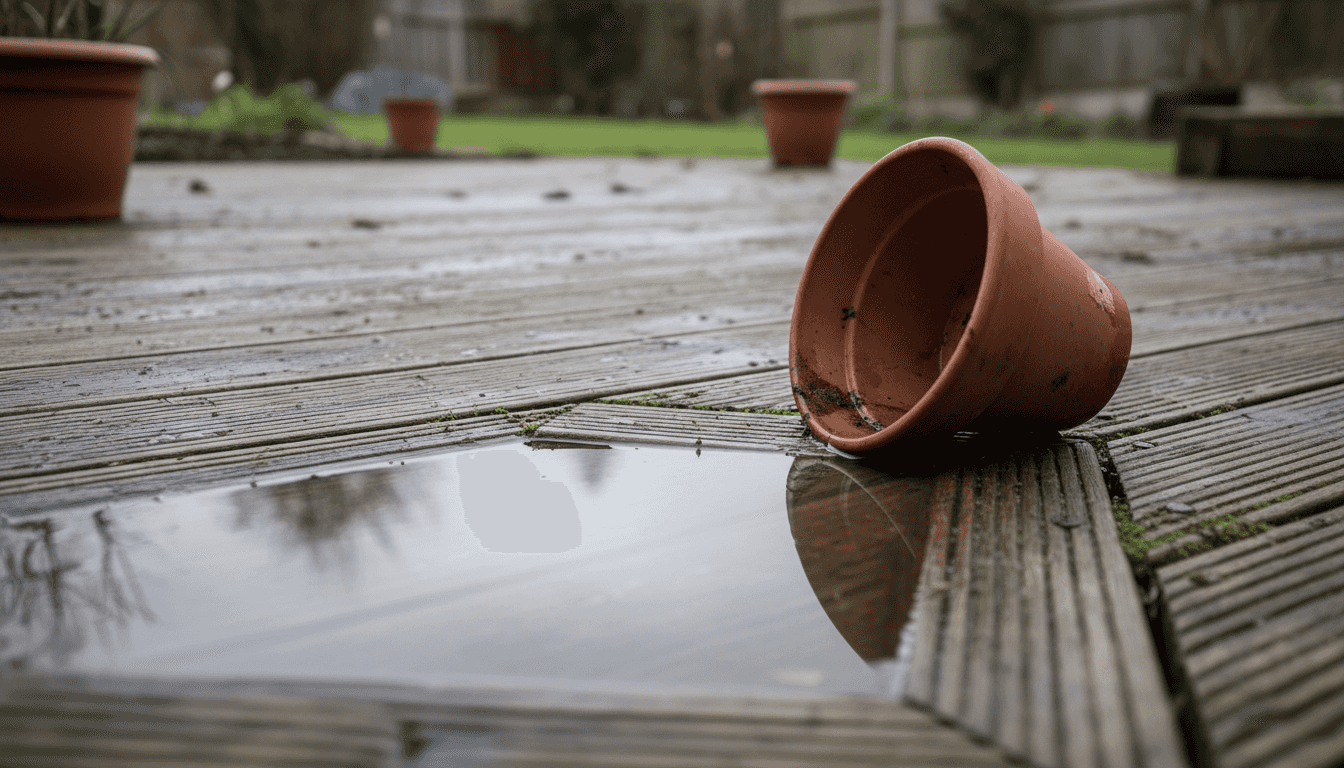
Surface textures significantly impact slip resistance across all materials. Fine brushed finishes provide subtle grip suitable for bare feet, while deeper embossing offers maximum traction in high risk areas. However, excessive groove depth creates maintenance challenges. Deep channels trap water, dirt, and organic debris, becoming breeding grounds for algae that reduces slip resistance.
Pro Tip: Choose composite decking with moderate texture depth around 1-2mm for optimal balance between slip resistance and easy cleaning, avoiding the maintenance headaches of deeply grooved surfaces.
| Material | Typical PTV Score | Maintenance Level | Durability |
|---|---|---|---|
| Composite | 40-50 | Low | 25+ years |
| Timber | Below 35 | High | 10-15 years |
| PVC Smooth | 30-38 | Medium | 20+ years |
| PVC Textured | 40+ | Medium | 20+ years |
Explore composite decking advantages for detailed material comparisons. Learn how to maintain composite decking in British weather conditions. Review benefits of low maintenance decking for long term cost analysis.
Common Misconceptions About Slip Resistant Decking
Many homeowners believe more surface grooves automatically improve safety. Research proves otherwise. Over textured surfaces can reduce slip resistance by 10% because deep grooves trap water and debris, creating slick biofilm layers. Moderate texturing performs better by allowing water drainage while maintaining clean contact surfaces.
Another myth suggests slip resistant decking costs significantly more and demands intensive maintenance. Quality composite options balance affordability with performance, often costing less long term than repeatedly treating timber. Modern composites require only periodic cleaning rather than annual sanding, sealing, and treatment cycles timber demands.
Some buyers assume safety means sacrificing aesthetics, fearing slip resistant decking looks industrial or unattractive. Contemporary manufacturing produces beautiful wood grain patterns and natural colors while delivering high PTV scores. You don’t compromise style for safety anymore.
Critical myth corrections:
- Scientific testing trumps texture assumptions; always verify PTV scores
- Lifecycle costs favor low maintenance composites over cheap timber
- Modern slip resistant surfaces match or exceed traditional decking beauty
- DIY installation remains feasible with proper guidance and tools
- Slip resistance doesn’t automatically increase product weight or complexity
Maintaining Slip Resistant Decking for Long Term Safety
Algae, dirt, and organic debris degrade slip resistance rapidly in British climates. Moisture loving organisms colonize textured surfaces, creating invisible slick layers that dramatically reduce friction. Even initially safe decking becomes hazardous without regular cleaning protocols.
Maintenance of slip resistant decking should include monthly cleaning during wet months and annual professional inspections to ensure surface integrity remains optimal. Autumn and winter demand more frequent attention as falling leaves and extended dampness accelerate biological growth. Spring cleaning removes winter accumulation before peak outdoor season.
Proper cleaning methods preserve surface texture without damaging protective coatings. Use soft bristle brushes with mild detergent solutions rather than pressure washers set too high. Excessive water pressure erodes texture patterns and can damage composite materials. Rinse thoroughly to prevent soap residue buildup, which itself becomes slippery.
Pro Tip: Schedule deep cleaning sessions in March and October to coincide with seasonal transitions, maximizing safety during peak garden use periods while preventing winter hazard buildup.
Recommended maintenance schedule:
- Weekly sweeping to remove loose debris and prevent organic buildup
- Monthly washing with appropriate cleaning solutions during wet seasons
- Quarterly inspection of high traffic areas for wear or damage
- Annual professional assessment of overall structural integrity and slip resistance
- Immediate spot cleaning of spills, bird droppings, or concentrated algae growth
Consult composite decking maintenance tips for specific product care instructions. Review professional decking maintenance recommendations for expert guidance on preserving safety features.
Practical Installation Tips to Maximise Slip Resistance
Selecting decking with certified Pendulum Test Values above 40 forms the foundation of safe outdoor spaces. Verify manufacturer documentation before purchasing, ensuring independent laboratory testing confirms published PTV scores. This due diligence prevents relying on unsubstantiated marketing claims that may overstate performance.
Installation practices dramatically impact long term slip resistance beyond material choice alone. Proper board spacing allows water drainage between planks, preventing pooling that encourages algae growth. Install decking with a slight gradient, typically 1:100, directing water away from house walls toward garden drainage points. This seemingly minor detail prevents standing water that transforms safe surfaces into slip hazards.
Consider these installation best practices:
- Position boards perpendicular to primary water flow direction
- Maintain consistent 5-8mm gaps between planks for drainage
- Install adequate subframe ventilation to prevent moisture trapping
- Use stainless steel fixings to prevent rust staining and degradation
- Apply end caps immediately to seal board edges from water infiltration
A homeowner in Manchester reduced slip incidents by 80% after replacing smooth timber with properly installed composite decking featuring 45 PTV certification. The project included drainage improvements and quarterly maintenance scheduling, demonstrating how material selection and installation quality work together.
Explore decking installation tips for UK gardens for comprehensive guidance. Review composite decking installation guidelines for step by step instructions ensuring safety and longevity.
Comparing Slip Resistant Decking Options: A Quick Reference Table
This comparison consolidates critical attributes across common decking materials, helping you evaluate options against UK climate demands and safety standards. PTV scores indicate measured slip resistance, while durability and maintenance ratings reflect real world performance expectations.
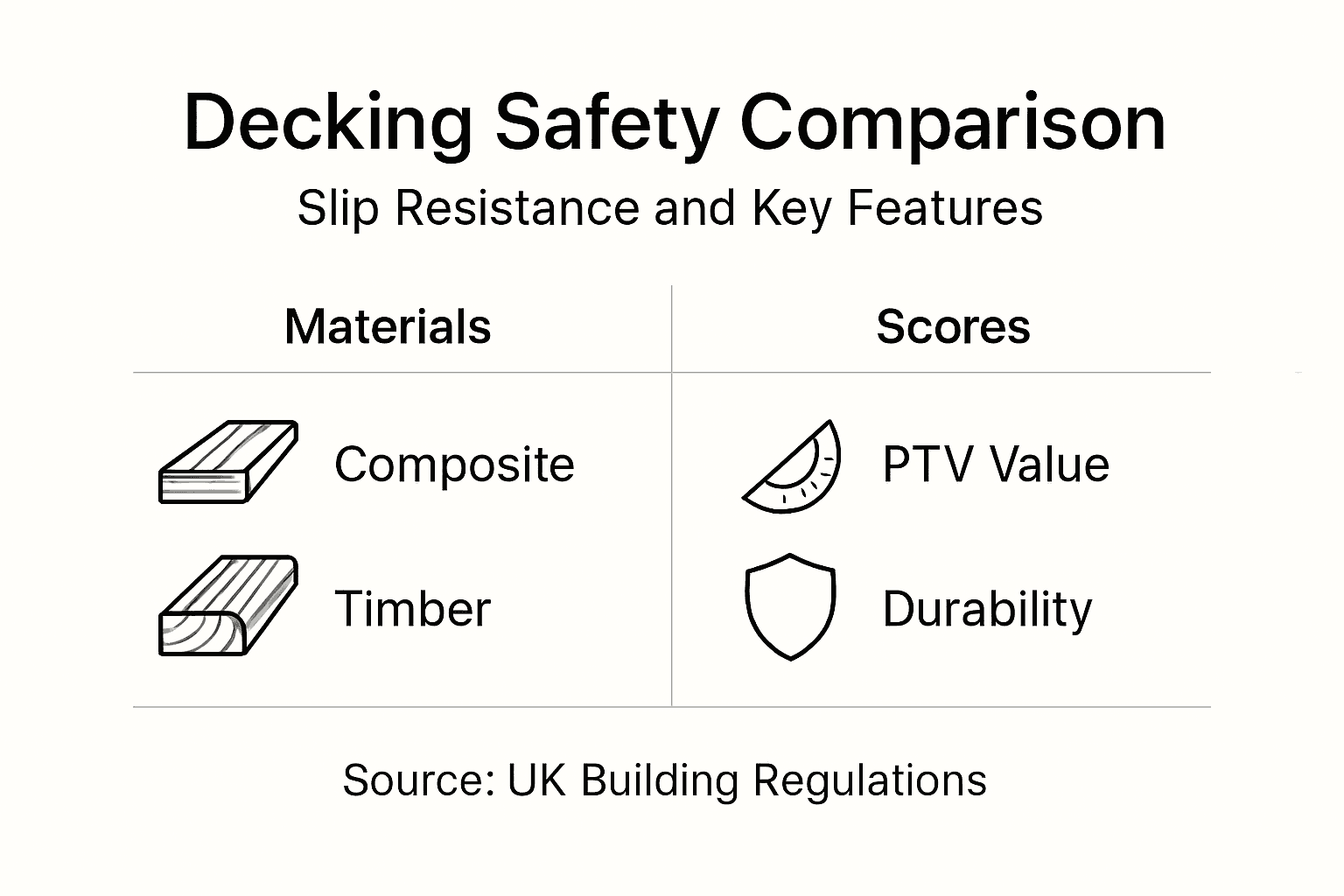
| Material Type | PTV Score Range | Maintenance Demand | Expected Lifespan | UK Climate Suitability | Relative Cost |
|---|---|---|---|---|---|
| Composite Standard | 40-50 | Low (quarterly cleaning) | 25-30 years | Excellent (resists moisture, algae) | Medium to High |
| Composite Premium | 45-52 | Very Low (biannual cleaning) | 30+ years | Excellent (enhanced resistance) | High |
| Timber Hardwood | 30-35 (treated) | High (monthly treatment) | 15-20 years | Moderate (requires sealing) | Medium |
| Timber Softwood | Below 30 | Very High (frequent treatment) | 10-15 years | Poor (prone to rot, algae) | Low |
| PVC Smooth | 30-38 | Medium (monthly cleaning) | 20-25 years | Good (moisture resistant) | Medium |
| PVC Textured | 40-45 | Medium (monthly cleaning) | 20-25 years | Very Good (grip maintained) | Medium to High |
Composite decking consistently outperforms alternatives in damp, moss prone British conditions. The material resists moisture absorption that causes timber decay and maintains texture integrity through freeze thaw cycles. While initial costs run higher than softwood, lifecycle value favors composite through dramatically reduced maintenance time and replacement frequency.
Your decking choice should align with specific site conditions, budget constraints, and maintenance willingness. High traffic areas near pools or water features demand maximum PTV scores regardless of cost. Less exposed sections may accept slightly lower ratings if properly maintained.
Conclusion: Choosing the Right Slip Resistant Decking for Your UK Home
Slip resistant decking transforms outdoor spaces from liability concerns into safe family gathering areas. Reducing fall injury risk by 25% or more justifies investment in quality materials and proper installation. British weather demands surfaces engineered specifically for constant moisture exposure, not generic solutions designed for drier climates.
Balancing material performance, surface texture, and maintenance commitment ensures long term safety without overwhelming upkeep demands. Composite decking emerges as the optimal choice for most UK homes, delivering 40-50 PTV scores with minimal ongoing care. Verify products meet UK recommended standards through independent testing documentation before purchasing.
Regular maintenance preserves slip resistance throughout your decking’s lifespan. Monthly cleaning during wet seasons and annual professional inspections catch problems before they compromise safety. This proactive approach protects your family while maximizing your renovation investment.
Prioritize safety focused purchasing decisions that provide genuine peace of mind. Your outdoor space should enhance home enjoyment, not create constant worry about potential accidents.
Explore Our Range of Slip Resistant Decking Solutions
Deck Kingdom offers expertly curated composite decking products engineered for superior slip resistance in challenging British weather. Our boards achieve certified PTV scores exceeding 45, meeting and surpassing UK safety standards for residential outdoor spaces.

Browse our complete selection of composite decking boards featuring various colors and textures to match your aesthetic preferences while ensuring family safety. Our composite decking installation tutorial guides you through proper fitting techniques that maximize drainage and slip resistance. Complete your project with composite decking end caps that seal board edges, preventing water infiltration and extending surface life. Every product includes detailed safety specifications and maintenance guidance for confident purchasing decisions.
Frequently Asked Questions
What is the minimum Pendulum Test Value (PTV) for safe decking?
UK standards recommend minimum PTV scores of 36-40+ for residential outdoor decking, with higher scores preferred for areas prone to moisture. Scores below 35 classify as high slip risk and should be avoided in home gardens.
How often should I clean my decking to maintain slip resistance?
Clean slip resistant decking monthly during autumn and winter when moisture levels peak, encouraging algae growth. Spring and summer allow quarterly cleaning unless organic debris accumulates faster in heavily shaded areas.
Can I improve slip resistance on existing decking?
Apply anti slip coatings or adhesive strips to existing smooth decking as temporary improvements, though these require regular reapplication. Replacing inadequate materials with certified composite decking provides permanent, reliable safety enhancement.
Are composite decks better than timber for slip resistance?
Yes, composite decking consistently achieves PTV scores of 40-50 compared to timber’s typical below 35 rating. Composites maintain slip resistance longer because they resist moisture absorption and biological growth that degrade timber surfaces.
Does slip resistant decking require special coatings?
Quality slip resistant composite decking achieves high PTV scores through engineered surface textures, requiring no additional coatings. Timber decking may benefit from anti slip treatments, but these add maintenance requirements and fade over time.

2 responses