
Choosing the right decking can reshape how you experience your garden, but the options might feel endless for British homeowners wanting both style and resilience. Upgrading with composite decking means less time on upkeep and more hours relaxing, as these advanced surfaces are designed to resist weathering and everyday wear. Discover how durable, low-maintenance outdoor living spaces are achievable with expert planning and the best material choices for your property.
Key Takeaways
| Point | Details |
|---|---|
| Importance of Decking | Decking extends living spaces outdoors, enhancing both functionality and aesthetics in residential designs. |
| Material Selection | Choosing between natural and synthetic decking materials is crucial for balancing aesthetics, cost, and maintenance needs. |
| Installation Considerations | Proper installation is vital; homeowners should adhere to guidelines and local regulations to avoid structural issues. |
| Long-Term Value | Quality decking investments can improve property value and provide versatile outdoor living solutions for personal wellbeing. |
Defining Decking in Outdoor Living Contexts
Decking represents a transformative outdoor architectural element that extends residential living spaces beyond traditional indoor boundaries. Architectural definitions of decking) describe it as a flat, elevated surface designed to support significant weight while providing functional and aesthetic outdoor living opportunities.
The core purpose of decking transcends mere structural implementation, serving multiple critical functions in residential landscape design:
- Creates seamless transitions between indoor and outdoor environments
- Provides additional usable living space for relaxation and entertainment
- Enhances property aesthetic and potential market value
- Enables flexible outdoor activity zones
- Offers adaptable design possibilities across various architectural styles
Traditionally, decking materials have evolved significantly, moving from simple wooden platforms to sophisticated composite systems. Residential construction guidelines now emphasise durability, safety, and design flexibility when considering outdoor living spaces.

Structural Considerations in modern decking design involve careful planning around load-bearing capacity, weather resistance, and integration with existing architectural elements. Homeowners must consider factors like material selection, ground preparation, and long-term maintenance requirements.
Pro tip: When planning your decking project, always consult professional installation guidelines and consider local building regulations to ensure structural integrity and compliance.
Types of Decking Materials and Their Uses
Decking materials represent a critical choice for homeowners seeking to create functional and aesthetically pleasing outdoor living spaces. Types of decking materials range from traditional natural woods to advanced synthetic options, each offering unique characteristics tailored to different environmental and design requirements.
The primary categories of decking materials include:
- Natural Woods
- Redwood
- Teak
- Mahogany
- Ipe
- Synthetic Materials
- Traditional composite
- Capped composite
- Cellular PVC
Natural wooden decking materials provide exceptional aesthetic appeal and renewable qualities, making them popular among homeowners who prioritise traditional charm and environmental sustainability. These woods offer rich textures and natural colour variations that can complement various architectural styles.
Synthetic decking options, by contrast, deliver superior durability and low-maintenance solutions. Composite decking has gained significant popularity in recent years, offering enhanced resistance to weathering, rot, and insect damage. These materials provide consistent appearance, longer lifespan, and reduced long-term maintenance compared to traditional wooden platforms.
Selecting the right decking material involves balancing aesthetic preferences, budget constraints, and long-term performance expectations.
Material Performance Factors include:
- Durability
- Maintenance requirements
- Cost
- Environmental resistance
- Aesthetic appeal
- Installation complexity
Pro tip: Consider consulting professional landscapers who can provide tailored advice about material suitability for your specific outdoor environment and usage requirements.
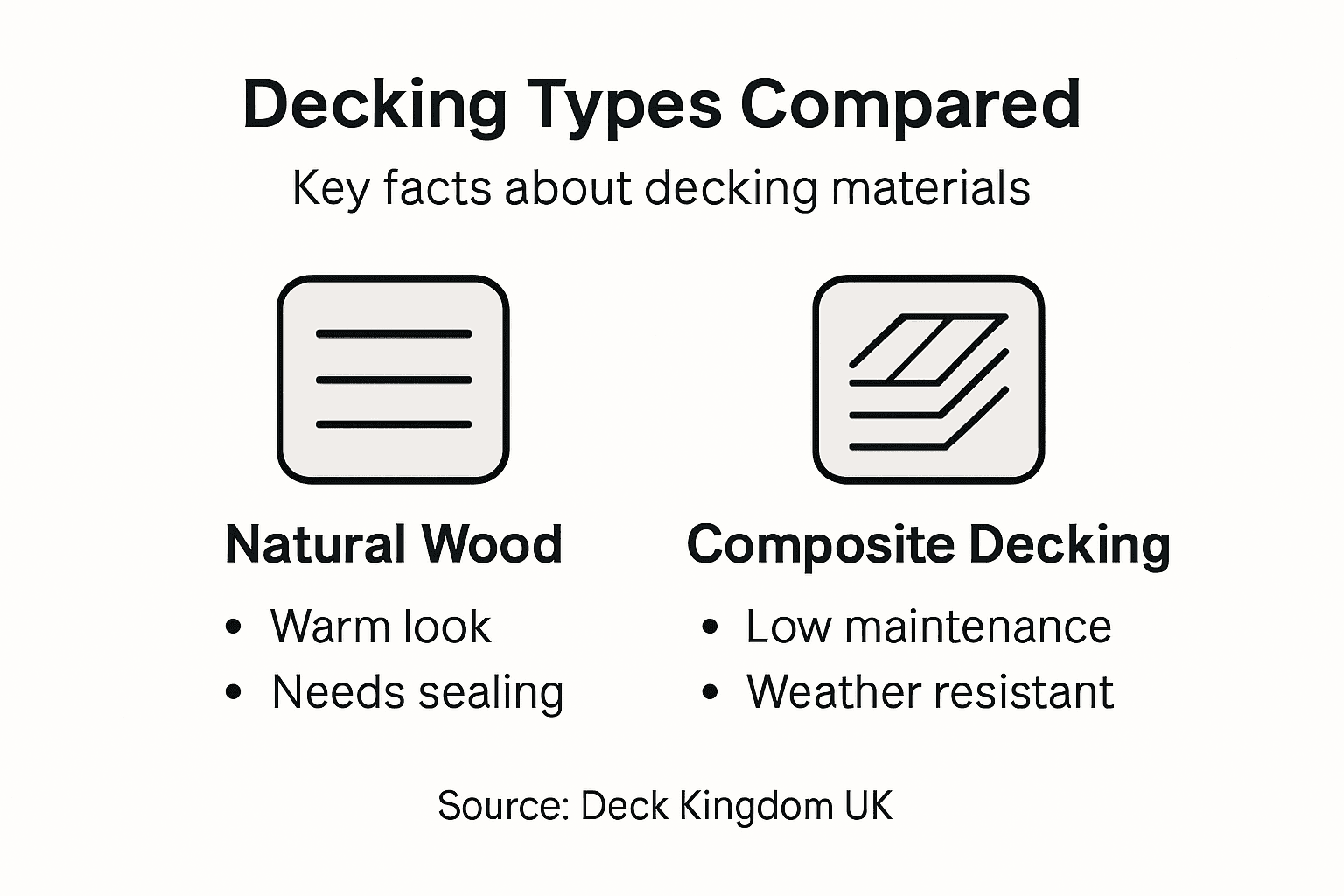
The following table outlines the main differences between natural wood and synthetic decking materials for easy comparison:
| Aspect | Natural Wood Decking | Synthetic Decking |
|---|---|---|
| Typical Appearance | Warm, natural grain patterns | Consistent, engineered finish |
| Maintenance Needs | Regular oiling or staining | Occasional cleaning only |
| Environmental Impact | Biodegradable, renewable | Uses recycled materials |
| Longevity | 10–20 years with care | 20–30 years with less upkeep |
| Cost Range | Moderate to high | Mid to premium |
Composite Decking: Key Features and Benefits
Composite decking represents a revolutionary approach to outdoor living spaces, combining advanced materials engineering with sustainable design principles. Innovative decking materials offer homeowners a sophisticated alternative to traditional wooden platforms, delivering exceptional durability and aesthetic versatility.
The core composition of composite decking includes several key characteristics:
- Material Blend
- Recycled wood fibers
- Recycled plastic components
- Engineered binding agents
- Performance Features
- Rot resistance
- Insect damage prevention
- UV protection
- Scratch resistance
Environmentally conscious homeowners appreciate composite decking’s sustainable approach, utilising recycled materials to create a long-lasting outdoor surface. The manufacturing process transforms waste plastics and wood fibers into a robust decking solution that maintains structural integrity and visual appeal over extended periods.
Maintenance Benefits of composite decking are particularly compelling. Unlike traditional wooden decking, these advanced materials require minimal upkeep, eliminating the need for regular staining, sealing, or extensive cleaning routines. Composite decking materials provide consistent performance with significantly reduced maintenance demands.
Composite decking represents a smart investment in outdoor living, balancing aesthetic appeal with practical, long-term durability.
Performance Considerations include:
- Colour retention
- Structural stability
- Weather resistance
- Thermal performance
- Installation flexibility
Pro tip: Always request material samples and installation guides specific to your local climate to ensure optimal composite decking performance.
Practical Value for UK Homeowners and Gardens
Garden decking transforms outdoor spaces into functional, versatile living areas that seamlessly connect homes with natural environments. Timber decking specifications offer UK homeowners innovative solutions for creating adaptable outdoor spaces, particularly on challenging landscape terrains like sloping sites.
Key practical advantages of decking for UK gardens include:
- Landscape Adaptation
- Solutions for uneven terrain
- Creates level outdoor living areas
- Enhances unusable garden spaces
- Functional Benefits
- Extended living environments
- Improved property aesthetics
- Increased outdoor usability
- Low-maintenance surface options
Environmental research highlights the broader significance of garden design elements. Green space integration demonstrates how thoughtfully designed outdoor spaces contribute to flood mitigation, biodiversity support, and personal wellbeing.
Wellbeing Considerations reveal that well-designed decking can transform garden spaces into mental health sanctuaries, providing areas for relaxation, social interaction, and connection with nature. These spaces become extensions of interior living environments, offering versatile platforms for recreation, entertainment, and personal retreat.
Decking represents more than a structural addition; it’s a strategic investment in lifestyle quality and environmental harmony.
Design Potential encompasses:
- Seamless indoor-outdoor transitions
- Adaptable entertainment spaces
- Personalised landscape solutions
- Enhanced property value
- Sustainable design integration
Pro tip: Consult local landscaping professionals to develop decking solutions tailored specifically to your property’s unique environmental conditions and personal lifestyle requirements.
Common Pitfalls and How to Avoid Them
Decking installation requires careful planning and attention to detail to prevent potential structural and aesthetic complications. Decking construction guidelines highlight critical areas where homeowners frequently encounter challenges during their outdoor renovation projects.
Common decking pitfalls include:
- Structural Weaknesses
- Inadequate foundation support
- Incorrect joist spacing
- Poor material selection
- Insufficient load-bearing capacity
- Installation Errors
- Improper ledger board attachment
- Incorrect fastener usage
- Non-compliance with building regulations
- Neglecting local environmental conditions
Material selection plays a crucial role in long-term decking performance. Deck maintenance strategies emphasise the importance of choosing materials appropriate for specific environmental conditions, understanding potential degradation risks, and implementing regular safety inspections.
Safety Considerations are paramount in decking projects. Homeowners must prioritise structural integrity, material durability, and compliance with local building codes to ensure their outdoor spaces remain safe and functional for years to come.
Preventative planning and professional guidance can transform potential pitfalls into successful outdoor living investments.
Risk Mitigation Strategies include:
- Comprehensive site assessment
- Professional consultation
- Regular maintenance checks
- Understanding material limitations
- Adhering to manufacturer guidelines
Pro tip: Always obtain professional advice and necessary permits before commencing your decking project to ensure structural safety and regulatory compliance.
Here is a summary of the main pitfalls to avoid and the best prevention strategies when planning decking projects:
| Common Pitfall | Prevention Strategy |
|---|---|
| Structural weaknesses | Conduct thorough site assessments |
| Faulty material selection | Select materials for local conditions |
| Installation mistakes | Follow manufacturer instructions |
| Non-compliance with regulations | Consult local authorities early |
| Neglected maintenance | Schedule annual safety inspections |
Transform Your Outdoor Living with Expert Decking Solutions
If you are ready to enhance your garden with durable, low-maintenance surfaces that bridge indoor and outdoor spaces seamlessly then explore our extensive range at Decking Archives – Deck Kingdom. Our premium composite decking products tackle common challenges such as weather resistance and structural integrity while providing the aesthetic appeal discussed in the article. 
Take the first step towards your ideal outdoor space by visiting Deck Kingdom for expert guidance, free samples, and quick nationwide delivery. For detailed assistance on installation best practices consult our Installation Videos Archives – Deck Kingdom. Start your transformation today with trusted materials that improve lifestyle quality and bring long-lasting enjoyment.
Frequently Asked Questions
What are the main benefits of installing decking in outdoor living spaces?
Installing decking enhances outdoor areas by creating seamless transitions between indoor and outdoor environments, providing additional usable living space for relaxation and entertainment, and increasing property aesthetics and market value.
What materials are commonly used for decking?
Common decking materials include natural woods such as redwood, teak, and ipe, as well as synthetic options like traditional composite, capped composite, and cellular PVC, each offering different aesthetic and performance characteristics.
How does composite decking differ from natural wood decking?
Composite decking offers superior durability, low maintenance, and increased resistance to weathering and insect damage compared to natural wood decking, which requires regular maintenance such as staining and sealing to preserve its appearance.
What are some common pitfalls to avoid during decking installation?
Common pitfalls include inadequate foundation support, incorrect joist spacing, improper ledger board attachment, and non-compliance with local building regulations. It’s essential to consult professional guidelines and conduct thorough site assessments to prevent these issues.

2 responses